
Outdoor Kitchens in Naples and Marco Island
In Naples, the lanai is not a patio — it's a wing of the house. Screened, roofed, pool-centered, and used more evenings than the dining room, the Southwest Florida lanai has quietly become the most important entertaining space in the region's homes. Which is why the outdoor kitchen here can't be a grill cart and a prayer. It's cabinetry, refrigeration, and stone, living a few miles — sometimes a few feet — from the Gulf of Mexico. Here's how to build one in Naples, Bonita Springs, Estero, or Marco Island that still looks right in a decade.
The lanai changes the design problem
Most of America's outdoor kitchens live in open air. Southwest Florida's mostly live inside screen cages, and that changes the calculus in both directions:
- What the cage helps with: no direct rain on the cabinetry most days, no falling debris, fewer insects, and slightly gentler UV. A lanai kitchen keeps its looks longer than a fully exposed one.
- What it doesn't help with: salt. Salt air moves through a screen like it isn't there, and it settles on every surface, hinge, and slide. Humidity is likewise undiminished, and an enclosed cage can actually trap heat around appliances. A screened kitchen needs the same marine-grade construction as an open one — a lesson many homeowners learn from their first rusted "stainless" grill cabinet.
- Ventilation matters more. Under a solid lanai roof, grill smoke needs a real plan — hood, high ceiling, or placement at the screen line — or every gathering starts with smoke in the seating area. We place the cooking zone with the prevailing Gulf breeze, not against it.
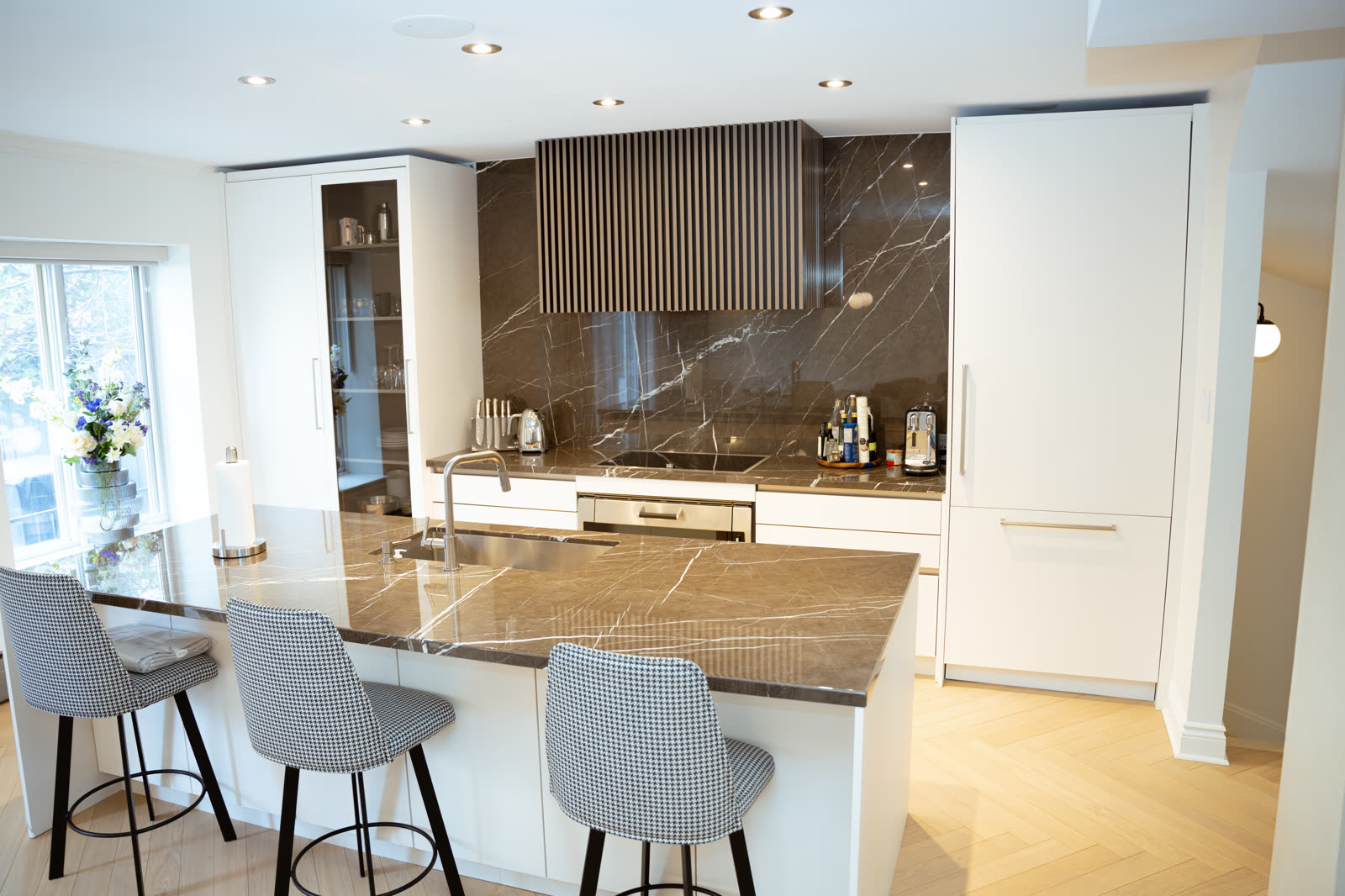
Materials: what survives here
We build our outdoor kitchens in powder-coated marine-grade aluminum, and Southwest Florida is precisely why. The comparison in brief — the long version is in our Florida salt-air guide:
- Marine-grade aluminum: cannot rust, carries powder-coat finishes that shrug off UV, stays dimensionally stable through the humidity cycle, and weighs little enough for straightforward install on pool decks. This is what the boats use, for the same reasons.
- Ordinary stainless: tea-stains and pits within a season or two this close to the Gulf; hinge and slide corrosion follows. Fine in Ohio, sacrificial here.
- Masonry with tile or stucco: handsome, but heavy on elevated decks, slow to build, and unforgiving when a built-in appliance dies and the opening doesn't match its successor.
- Counters: porcelain and granite lead; porcelain especially handles UV and heat without sealing rituals. Marble stays indoors.
- Appliances: genuinely outdoor-rated refrigeration only — the garage-fridge experiment dies quickly on a lanai in August.
Storms, codes, and the post-Ian standard
Hurricane Ian's surge rewrote assumptions from Fort Myers Beach to Marco. What it taught about outdoor kitchens: bolted-down, engineered cabinetry survives wind events that send loose carts through screens; aluminum construction that took floodwater can often be washed, dried, and re-fitted while wood-based builds molder; and Collier County's permitting for gas lines, electrical, and structural attachment is not bureaucracy to dodge — it's the difference between an asset and a liability at insurance time. New elevated construction on Marco adds a wrinkle: outdoor kitchens on upper decks need the lighter footprint aluminum provides. We design to the wind exposure, anchor to the structure, and coordinate utilities with your GC and permit set.
Neighborhood notes
- Port Royal, Aqualane, Old Naples: estate lanais where the outdoor kitchen matches the interior's design language — full cabinetry runs, bar seating for eight, ice makers, kegerators, pizza ovens. The outdoor kitchen as second kitchen, not accessory.
- The club communities — Pelican Bay, Grey Oaks, Bonita Bay, Mediterra: renovation-wave projects replacing 1990s builder outdoor kitchens; HOA architectural review applies, and our drawings sail through it.
- Marco Island: maximum exposure — Gulf on three sides, salt everywhere. Marine-grade or nothing, and outdoor-rated everything.
- Ave Maria and the eastern new builds: less salt, same sun and rain; aluminum still wins on longevity, and budgets stretch further inland.
Budget and sequence
A serious lanai kitchen in Collier County typically lands in the range covered by our outdoor kitchen cost breakdown — cabinetry, counters, and appliances each carrying roughly a third, with utilities and permitting as the swing items. Sequence it like the indoor kitchen: design first, utilities roughed to the drawings, cabinetry produced during permitting, appliances on site before counters template. Snowbird owners: the summer you're away is the perfect construction window, and the whole project can run remotely against our drawings.
How we serve the Southwest coast
Our Bonita Springs showroom serves Naples, Marco Island, Estero, and Fort Myers with designers who spend their weeks on lanais exactly like yours. iKitchen manufactures made-to-measure in our own facilities, delivers white-glove, installs with our own crews, and backs the work with a lifetime warranty — indoors and out. If the indoor kitchen is next on the list, we build both from one design language; see our custom kitchens.
Layouts that work on a lanai
The screen cage's geometry pushes toward a few proven layouts. The single run along the house wall is the workhorse — 10 to 16 feet of grill, refrigeration, and storage that keeps the pool view open and the plumbing runs short. The L-shape wraps a corner post and adds bar seating on the return, putting the cook in conversation with the pool instead of facing away from it — the most requested configuration in our Naples projects. The island, freestanding between pool and seating, suits the biggest cages and estate lanais but demands utility runs planned at construction time. Whatever the shape, three clearances make or break daily use: 42 inches minimum behind the grill for the cook, real landing counter on both sides of the fire, and bar overhangs deep enough (12 inches minimum) that guests' knees survive. And leave the sight line from the kitchen to the pool unbroken if children swim — a design rule Naples grandparents state more firmly than any building code.
Living with it: maintenance in Gulf air
A marine-grade lanai kitchen asks little, but not nothing. A freshwater rinse and mild-soap wipe of powder-coated surfaces every few weeks clears the salt film before it can dull anything; stainless appliance faces take a dedicated cleaner twice a season; porcelain counters need soap and water only. Before a named storm, the drill is simple: secure loose items, latch the doors, shut the gas at the valve — the cabinetry itself stays put, because it's bolted to structure. After summer away, snowbird owners return to a kitchen that needs an hour of wipe-down rather than a restoration, which is the entire argument for buying the right materials the first time.
Practical takeaways
- The screen cage protects looks, not metal — spec marine-grade aluminum even on a covered lanai.
- Plan smoke and breeze before placing the grill; the seating area will thank you.
- Anchor, permit, and document — the post-Ian standard pays off at storm time and insurance time.
- Only outdoor-rated refrigeration, porcelain or granite counters, and design that matches the house.
Building a lanai kitchen in Naples, Bonita, or Marco? Book a free 30-minute consultation — bring a photo of your lanai and we'll bring the layout ideas.