
Brass, Bronze, and Black: Choosing Cabinet Hardware Finishes
Hardware finish is the last decision of a kitchen project and, for many clients, the hardest. It shouldn't be — but the industry has made it confusing by selling the same four metals under forty names, some of which describe a material, some a color, and some a plating process, without ever telling you which is which. "Champagne bronze" contains no bronze. "Satin brass" might be solid brass or plated zinc. "Gunmetal" is a mood.
Handles are the jewelry of the kitchen, and like jewelry, what matters is what's under the shine and how it ages on the hand. Here's how I walk clients through it, finish by finish, after three decades of watching hardware grow old in real kitchens.
The first question: living finish or stable finish?
Before color, decide how you feel about change. A stable finish — lacquered brass, PVD-coated anything, powder-coated black — looks the same in year ten as day one. A living finish — unlacquered brass, oil-rubbed bronze, raw copper — is designed to wear: it darkens, brightens where fingers rub, and develops a patina map of how your family uses the kitchen. Neither is better; they're different philosophies. But this is the question that prevents regret, because a client who expected showroom-shine forever will be unhappy with the honest aging of unlacquered brass by month six, while a patina-lover finds PVD brass slightly lifeless. We ask it before showing a single sample.
The big five, honestly reviewed
- Satin/brushed nickel. The workhorse. Warm-neutral silver, hides fingerprints and water spots, matches every appliance suite, offends no one. Its weakness is its virtue: it recedes. On the quiet white oak and walnut kitchens we build so many of, that restraint is usually exactly right.
- Polished nickel. The luxury silver — warmer and deeper than chrome, with a mirror depth that reads instantly high-end, especially against painted cabinetry. Shows prints; wants an occasional wipe. Beautiful in traditional and transitional rooms.
- Brass — satin, unlacquered, or PVD. The defining warm finish of this era, and the one with the widest quality spread. Solid brass with a PVD topcoat gives you the color, stabilized. Unlacquered solid brass gives you the living version that antique dealers love. Brass-plated zinc from a bargain bin gives you pink-worn edges in three years. Weight is the showroom test: solid brass is unmistakably heavy.
- Oil-rubbed and dark bronze. Deep brown-black with warm undertones, traditionally a living finish over solid brass or bronze. Gorgeous with cream paints and rich woods. Check whether you're being sold the real thing or a bronze-toned coating on zinc — the real thing wears to highlights; the coating wears to grey.
- Matte black. The decade's default accent, now a classic in the making. Quality varies more than any finish: powder-coat and PVD black wear beautifully; cheap e-coated black rubs through at the pull's leading edge within a couple of years, and you will see every rub because the contrast is total. Black also shows dried water droplets more than any brushed metal — worth knowing at the vanity, where hands are wet half the time.
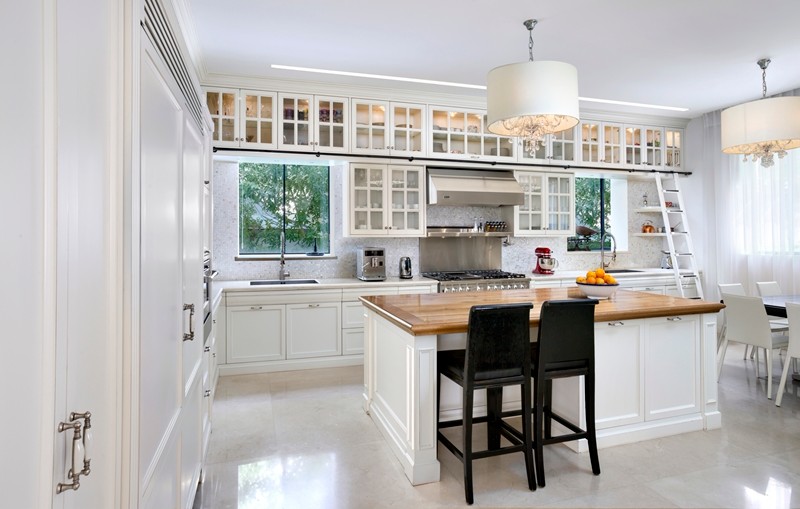
PVD: the three letters worth paying for
If you take one technical term from this article, take this one. PVD — physical vapor deposition — bonds a micro-thin ceramic-metallic layer to the hardware in a vacuum chamber. It's how quality manufacturers now deliver brass, bronze, gunmetal, and black finishes that shrug off ten thousand grabs, hand lotion, and kitchen cleaners. In salt-air markets — our Florida clients know exactly why I mention this, for the same reasons covered in our Florida salt-air materials guide — PVD is the difference between hardware that lasts and hardware that pits. Electroplated finishes are thinner and softer; lacquered finishes eventually craze. When we spec hardware on a project with a lifetime-warranty mindset, PVD or solid living metals are the two roads we trust.
Mixing metals without making a mess
You do not need to match everything, and the best rooms rarely do. The rules that keep mixing intentional rather than accidental:
- Two metals, three at most. A dominant and an accent. Brass cabinet hardware with a stainless appliance suite and black lighting is a classic, stable triad.
- Separate by function, not randomly. All cabinet hardware one finish; plumbing another; lighting can join either camp. What looks chaotic is two finishes doing the same job on the same wall.
- Match undertones to the palette. Warm metals (brass, bronze) love warm woods, creams, and greens. Cool metals (nickel, chrome) love greys, blues, and white marble. Black goes everywhere but reads strongest against pale cabinetry.
- The faucet is the referee. It's the largest metal object at eye level; choose it first and let cabinet hardware agree or deliberately contrast with it.
Knobs, pulls, and the sizing that separates custom from catalog
Finish gets the attention, but sizing is where kitchens quietly go wrong. Our defaults after thousands of installs: knobs or 128 mm pulls on doors; pulls sized to roughly one-third of the drawer width on drawers, which means genuine 300–450 mm hardware on wide drawer banks, not the same 96 mm pull repeated like a rubber stamp. Appliance panels take appliance pulls — 18 mm+ posts that a yanked dishwasher door won't loosen. And orientation stays consistent: vertical on doors, horizontal on drawers. If you're going handle-free instead, that's not a finish decision at all but a mechanism decision — push-to-open and Servo-Drive systems from the manufacturers we compare in our Blum vs Hettich vs Häfele guide.
How to shortlist without losing a month
Order real samples of your final three — one knob and one pull each — and live with them for a week. Tape them to the sample door in your actual kitchen light, not the showroom's. Handle them with damp hands, with lotion, after cooking. Morning light flatters brass; cool LED flattens it; black disappears against charcoal paint and sings against white oak. This one-week ritual costs perhaps $80 in samples and has saved more clients from re-ordering than any rendering we've ever produced. It's the same advice we give for every finish decision in the process — small physical tests beat large digital guesses.
Takeaways
- Decide living vs stable before choosing color — it's the real fork in the road.
- Solid brass/bronze or PVD-coated finishes are the two durability paths worth your money. Weight and the letters "PVD" are your quality tells.
- Two metals per room, separated by function, undertones matched to the palette.
- Size pulls to the drawer, not the catalog default. Wide drawers want long hardware.
- Test samples in your own light for a week. Always.
Every iKitchen showroom has a hardware wall where you can handle dozens of finishes against real door samples — the fastest way to turn this whole article into a twenty-minute decision. Book a free 30-minute design consultation, or browse our custom kitchens to see these finishes living on finished projects. Made in Canada, delivered in 8–12 weeks, warrantied for life — jewelry included.