
Where to Splurge and Where to Save in a Kitchen
Every kitchen budget is a set of trades. Nobody — not even our clients with genuinely unlimited budgets — buys the best version of everything, because "best of everything" produces an incoherent kitchen. The skill is knowing which spending decisions you'll feel every single day for twenty years, and which ones you'll forget by the first dinner party.
Thirty years of building kitchens and, more importantly, revisiting them a decade later, has given me a very clear list. Here it is: where to put the money, where to pull it back, and the three cuts I've watched people regret most.
Splurge: the things you touch every day
- Hinges and drawer slides. The least visible line on the quote and the one that defines how the kitchen feels in year ten. A premium Blum or Hettich undermount slide costs $40–$70 per drawer versus $8 for the builder-grade version. Multiply by 25 drawers and you're talking about $1,200 of difference on a $60,000 kitchen — the best 2% you will ever spend. Our European hardware comparison covers the brands in depth.
- Drawers instead of doors. Base cabinets with deep drawers cost 25–40% more than the same cabinet with a door and shelf. Buy them anyway, everywhere you can. Bending and reaching into a dark base cabinet is the daily tax of a cheap kitchen.
- Installation. Custom cabinetry installed poorly looks worse than stock cabinetry installed well. Scribing to crooked walls, aligning a wall of flush doors to a two-millimeter reveal — this is a craft, and the difference between quotes is rarely more than $2,000–$4,000 on a full kitchen. Pay it.
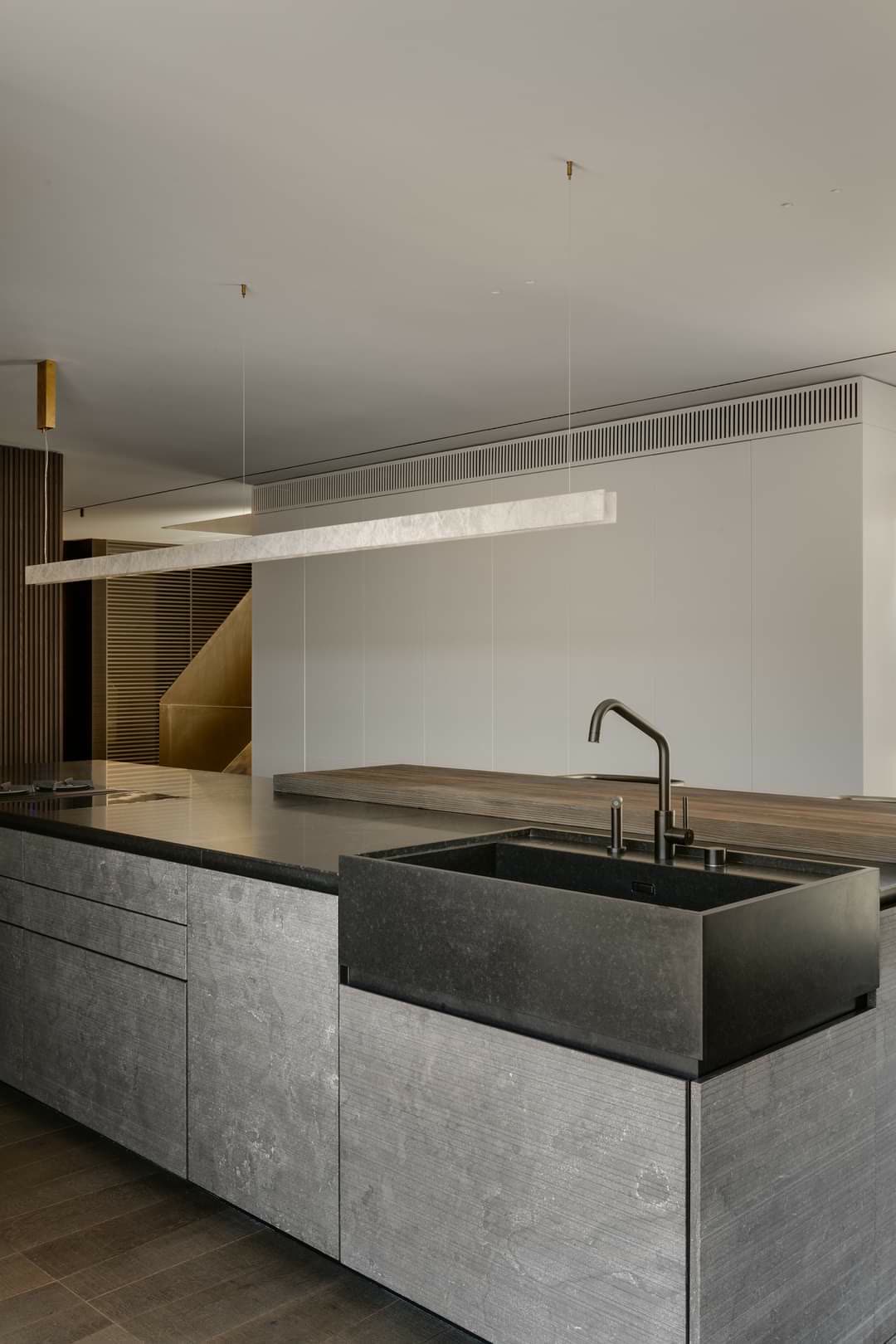
- The island. It's the most-used, most-seen piece of furniture in your house. Deep drawers, seating overhang, quality stone. If one area of the kitchen gets the premium door style and finish, make it this one — our island design guide shows what that investment buys.
- Tall storage and pantry fittings. A well-fitted pantry cabinet with pull-outs replaces an entire wall of uppers in daily usefulness. $2,500–$5,000 well spent.
Save: the things nobody can tell apart
- Perimeter door styles. A simple slab or Shaker door on perimeter runs, with the statement finish reserved for the island and tall units, saves 15–25% on cabinetry with zero loss of effect. The eye reads the kitchen as a composition, not door by door.
- Appliances beyond the mid-pro tier. This is the unpopular one. A $22,000 range and a $4,500 range both hold 350 degrees. Appliances are the fastest-depreciating items in the kitchen — they last 10–15 years while your cabinetry lasts 30+. Buy reliable, buy counter-depth, skip the badge.
- Backsplash exotica. A $12/sq ft tile installed beautifully beats a $90/sq ft tile installed adequately. Or run the countertop material up the wall 6 inches and paint above it — the current look, and cheaper.
- Decorative lighting fixtures. Get the lighting plan right — layers, placement, color temperature — and the pendants themselves can come from anywhere. Fixtures are jewelry; they can be swapped in an afternoon. Layout can't.
- Faucets in the middle tier. The $400–$700 tier from a serious plumbing brand outlasts the $1,800 designer piece from a lifestyle brand. Spend on the valve, not the finish name.
The middle ground: countertops
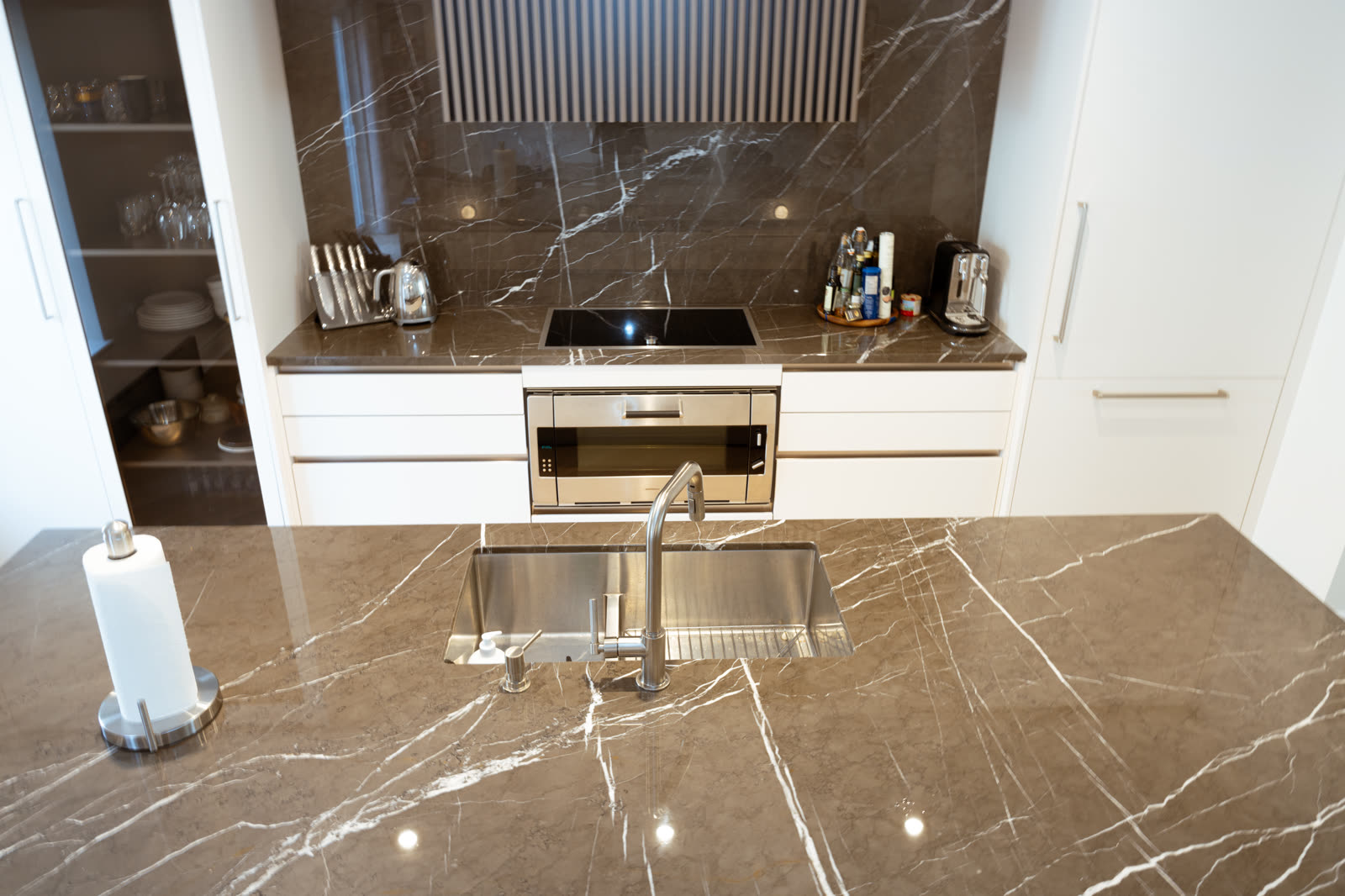
Counters deserve their own paragraph because they're where "splurge vs save" gets subtle. Save by avoiding the famous-name quartz patterns — several manufacturers make near-identical slabs at 60% of the price. Splurge on thickness and edge details where they're seen, and on fabrication quality always: a cheap fabricator's visible seam in the wrong place ruins a $15,000 stone budget. Book-matched waterfall islands are gorgeous and cost $3,000–$6,000 extra; do them when the island is the hero, skip them when it isn't.
The three cuts people regret most
- Cutting the cabinet spec you can't see. Thin backs, stapled joints, unbanded edges inside the box. The kitchen looks identical on install day and swells, sags, and chips by year five. This is the core of the honest conversation in our custom vs semi-custom vs stock comparison — the word "custom" tells you nothing about box construction.
- Cutting the design phase. Skipping proper design to save $3,000 is how people buy $60,000 kitchens with the dishwasher blocking the silverware drawer. Our design retainer exists precisely so this doesn't happen — it's credited toward your order, and the fixed itemized quote it produces protects the whole budget.
- Cutting counter space next to appliances. Landing zones beside the range and fridge feel negotiable on paper and never are in life. If the budget forces a smaller kitchen, shrink the island before you shrink the landing zones.
A note on how payment timing shapes these choices
One practical reason to settle splurge-vs-save decisions early: at iKitchen, your itemized quote is fixed at design sign-off, a 50% production deposit releases the build, and the balance is due before delivery, with production running 8–12 weeks. Once production begins, the spec is the spec — deposits are non-refundable because your cabinetry is being physically built. The splurge/save debate is free during design and expensive after it. Have the argument with your partner in the showroom, not in week six of production.
Practical takeaways
- Splurge: hardware, drawers, installation, the island, pantry fittings — the daily-touch items.
- Save: perimeter door styles, appliance prestige tiers, backsplash exotica, decorative fixtures.
- Never cut: box construction quality, the design phase, or landing zones beside appliances.
- Counters: save on the brand name, spend on fabrication and visible edges.
- Lock every decision before the 50% deposit — changes after production start are the most expensive purchases in renovation.
The best budget isn't the biggest one — it's the one pointed at the right targets. If you'd like a second opinion on where your kitchen budget should flex, book a free 30-minute consultation with an iKitchen designer, or see how these priorities play out in our custom kitchens.