
Matte vs Gloss Cabinet Finishes: Fingerprints and Light
Sheen is the finish decision people make last and regret first. Color gets months of deliberation; whether that color reads as velvet or as glass gets decided in an afternoon — and then you live with the consequences every time sunlight rakes across a door or a child plants a palm on the island. After thirty-plus years of spraying both, I can tell you sheen changes a kitchen more than most color changes do.
Here's the physics, the maintenance reality, and the honest guidance we give at the design table.
Sheen is a number, not a vibe
Finishers don't say "kind of shiny." We measure sheen in gloss units (GU) with a glossmeter that bounces light off the surface at 60°. The scale that matters for cabinetry:
- Super-matte / dead matte: 2–10 GU. Absorbs light; reads as velvet or stone.
- Matte: 10–20 GU. The workhorse of current high-end design.
- Satin / eggshell: 25–40 GU. The traditional "safe" cabinet sheen; a soft glow without mirror behavior.
- Semi-gloss: 50–70 GU. Rare on modern cabinetry; lives on trim.
- High gloss: 85–95+ GU. A mirror. Polished acrylic, PET, or buffed 2K lacquer.
Why the numbers matter: "matte" from one supplier can be 8 GU and from another 25, and they look nothing alike across ten feet of island. When we spec a finish, the GU target is on the order — and when you compare quotes, it's a fair thing to ask for in writing.
The fingerprint question, answered by chemistry
Fingerprints are sebum — skin oil — and what you see is the difference in reflectivity between oiled and clean surface. On high gloss, a print scatters light against a mirror background: visible from across the room, especially on dark colors. On traditional matte finishes, prints hide well — unless the matte is cheap, where the microscopic texture that kills the shine actually holds oil and burnishes shiny over time at the handles.
This is exactly the problem modern anti-fingerprint (AF) super-matte surfaces were engineered to solve. Nanotech acrylic surfaces (the technology behind materials like Fenix NTM and today's AF lacquered doors) combine 2–4 GU sheen with low surface energy, so sebum neither shows nor sticks — and some are thermally healing, meaning fine micro-scratches close up under gentle heat (an iron over baking paper, per manufacturer instructions — a genuinely strange thing to watch work). The practical ranking for busy families, best to worst: AF super-matte, quality matte 2K, satin, then high gloss — with dark high gloss as the full-time job at the bottom of the class.
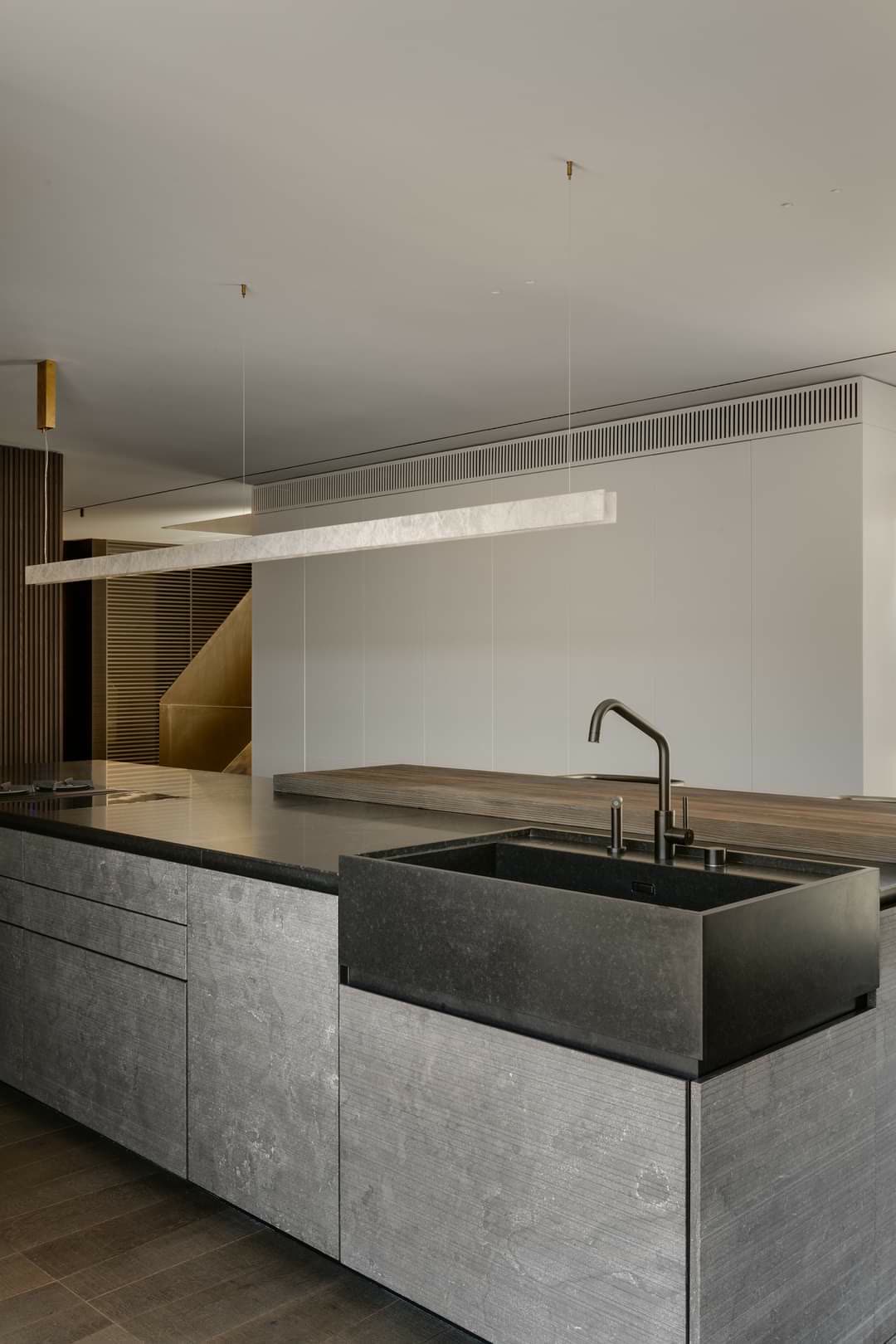
Scratches: who hides damage better?
Micro-scratches — the swirl-mark haze from years of wiping — are visible for the same reason fingerprints are: local change in gloss. A scratch dulls a glossy surface and shines a matte one. In practice gloss loses this fight badly, because a mirror makes every deviation obvious, while matte's diffuse reflection swallows all but the deepest scratches. There's one consolation for gloss: polished acrylic and buffed lacquer can be machine-polished back to new, the way a detailer polishes a car; a matte surface can never be polished (polishing raises gloss — you'd erase the finish's identity) and a deep matte scratch means refinishing the door. Shallow damage favors matte enormously; deep damage is more recoverable on gloss. Homes with kids and dogs: matte. Adults-only showpiece: gloss is livable.
Light: the argument nobody expects gloss to win
Now the case for gloss, and it's a strong one in the right room. A high-gloss surface is functionally a mirror, and in a small, dim, or north-facing kitchen it multiplies whatever light exists — bouncing window light deep into a galley, doubling the apparent size of a condo kitchen. This is why gloss white and gloss cream have never died in urban apartments, and why the handleless gloss slab remains the signature of small-space European design. The cost: a mirror reflects everything, including waviness. Gloss demands a dead-flat substrate (which is why gloss doors are almost always acrylic or PET over MDF, or many buffed coats of 2K over MDF — never over open-grain wood without full pore filling), and it turns strong under-cabinet lighting into visible hot-spot streaks unless the lighting is diffused.
Matte does the opposite: it absorbs light and calms a room. In big, bright, high-window kitchens, matte reads expensive and serene. In a dark basement suite it can go flat and lifeless. The room votes — which is why we always look at your light before recommending sheen, the same way we match species to light in white oak vs walnut.
Cost, and combinations that work
True high gloss is the most expensive sheen to do well — polished acrylic doors or multi-coat buffed 2K add real money, while super-matte AF surfaces sit just below them and standard matte/satin sprayed finishes are the value position. Where the budget conversation lands depends on the whole project, of course — see our custom kitchen cost guide for the full picture — but a rule that serves clients well: spend sheen money at eye level. A gloss upper run over matte base cabinets bounces light where you want it and hides fingerprints where hands actually go; a super-matte island under pendants is the tactile centerpiece guests can't stop touching. Mixed-sheen kitchens, done with one undertone family, photograph beautifully and live even better.
One last craftsman's note: sheen and touch-up are entangled. A matte finish touch-up blends easily; gloss demands polish-out perfection. And whatever you choose, insist the interior components and any replacement doors come from the same finishing system — sheen mismatch between a year-one door and a year-six replacement is exactly the problem our formula-on-file lifetime warranty exists to prevent.
Practical takeaways
- Ask for sheen in gloss units, not adjectives. "Matte" spans 2–25 GU and the difference is enormous.
- Fingerprints: worst on dark high gloss, best on AF super-matte. Quality matters more than category on mattes.
- Micro-scratches hide in matte and glare on gloss — but gloss acrylic can be polished back; matte can't.
- Small dark kitchens gain real light from gloss; big bright kitchens gain calm from matte.
- Mixing sheens by zone — gloss at eye level, matte at hand level — is a legitimate designer's trick, not a compromise.
Sheen has to be seen in your own light to be chosen well. Book a free 30-minute consultation and we'll bring super-matte, satin, and gloss samples of the same color — or visit our custom kitchens to see finished sheens photographed in real homes.