
Outdoor Kitchen Lighting and Fans: Comfort After Sunset
Most outdoor kitchens are used more after dark than before it — weeknight dinners start at seven, parties peak at ten. Yet lighting and airflow are routinely the last line in the budget and the first thing "value-engineered" away, which is how you end up grilling by phone flashlight under a single builder-grade flood that makes the patio look like a parking lot. The comfort layer — light you can cook by, light you want to linger in, and air that moves in August — is what turns an outdoor kitchen from a daytime appliance into an evening room.
Think in layers, exactly like indoors
Indoor lighting design works in three layers — task, ambient, accent — and the patio changes nothing except the weather sealing. What it punishes harder than any interior is the single-source approach: one bright flood creates glare, hard shadows exactly where you're cutting, and an interrogation-room mood at the table.
- Task lighting goes where knives and fire are: directed downlights or fixtures under the shade structure aimed at the grill and prep counters, strong enough to judge doneness by (a real problem — meat color lies under dim or very warm light). At the grill we aim for the light coming from slightly behind or beside the cook, never from directly behind (you grill in your own shadow) and never a bare source at eye level across the island.
- Ambient lighting is the layer guests feel: warm, low-level, multiple small sources — post lights, wall washes on the house, string lights over dining if the style allows, LED tape under counter overhangs and toe-kicks. Under-counter tape floating a bar top at night is the single highest charm-per-dollar move in outdoor lighting.
- Accent lighting sells the space: a grazing light on a stone wall, uplights in the landscape beyond the kitchen, and — a detail we build into cabinetry — in-cabinet lighting that greets you when you open doors after dark, the same courtesy our interior clients get.
Color temperature is where outdoor spaces most often go wrong. The rule we design by: 2700–3000K everywhere people relax, up to 3500–4000K only in tight task zones — and dimmable everything, because the same kitchen hosts a task-lit Tuesday cleanup and a candlelit Saturday. Cheap cool-white LEDs make travertine look like a hospital corridor; warm light is the difference between a resort and a loading dock.
Ratings and hardware that survive outside
Everything electrical outdoors answers to the same physics that governs the cabinetry — water and salt find every weakness. The spec sheet items that matter: wet-rated fixtures (not merely damp-rated) anywhere rain or spray can reach, IP65 or better for anything at counter level or below (hose-down territory), marine-grade or composite housings near the coast — bargain fixture housings corrode into powder in two salt-air seasons, a lesson our Florida materials guide teaches about everything with a screw in it — and GFCI protection on every circuit with in-use covers on every outlet. LED tape needs outdoor-rated channel and sealed end caps; the indoor reel from the hardware store dies its first wet week.
Controls deserve one sentence of planning and repay it nightly: switch the layers separately (task / ambient / accent), dim them independently, and put controls both at the house door and in the kitchen — nobody walks across a dark yard to turn the lights on. Smart switches make scenes effortless ("cook," "dine," "off but path lights"), and a dusk timer on the ambient layer means the kitchen glows hospitably every evening whether or not anyone's out there yet.
Fans: airflow is comfort engineering
In the humid half of the country, a fan extends the outdoor season as much as a heater does in the cold half. Moving air at 2–3 mph reads as five to eight degrees cooler on skin, disrupts mosquitoes (they're weak flyers — a breeze grounds them), and helps clear the smoke haze that pools under covered kitchens.
- Ratings first: damp-rated fans for covered, enclosed-adjacent spaces; wet-rated for anywhere wind-blown rain reaches. Coastal installs want sealed motors and composite or marine-finished blades — a rusting fan over a dining table drops flakes on dinner.
- Size to the space: a 52–60 inch fan covers a dining zone; large pergolas often want two smaller fans over the zones people occupy rather than one giant centered over nothing. Blade height minimum 7 feet 6 inches above the deck; DC motors run quieter and sip power at the low speeds you'll actually use.
- Placement vs fire: never directly over the grill — a downdraft fan over open burners plays havoc with flames and blows smoke sideways into faces. Offset fans to the social side and let the grill's heat rise clean. Under a louvered roof, run the fans with blades cracked open and the smoke management improves dramatically — geometry covered in our pergola guide.
- Portable and misting: honest options for uncovered kitchens — a quality pedestal misting fan earns its keep in Dallas; just give it a dedicated outlet rather than a cord across a walkway.
Wire it before it's beautiful
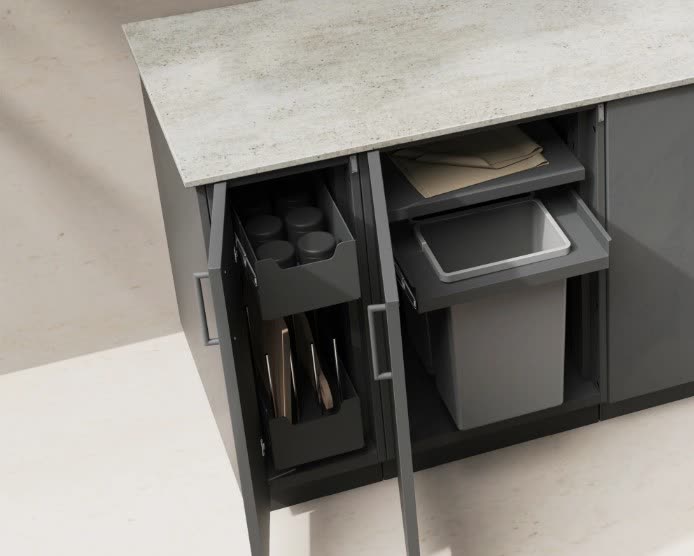
Every element above shares one requirement: conductors in place before hardscape and cabinetry close up. Lighting circuits, fan boxes rated for fan weight, low-voltage runs for tape and landscape layers, and spare conduit for the layer you'll add later — it's all a footnote during rough-in and a saw-cut through finished stone afterward. This is the same drum we beat in our utilities planning guide: the comfort layer is cheap when it's drawn and expensive when it's remembered. In our own projects, lighting channels and wire paths are integrated into the welded aluminum cabinetry at fabrication, so under-counter and toe-kick light arrives plug-and-play.
Bugs, glare, and the neighbors: three quiet details
Three refinements separate professionally lit outdoor kitchens from bright ones. Insects: light attracts them, but wavelength matters — warm LEDs around 2700K draw dramatically fewer bugs than cool white, and amber "bug light" modes on smart fixtures are genuinely effective over dining zones. Combine warm light with moving air from the fans and August evenings become livable without a single zapper. Glare discipline: outdoors there's no ceiling bounce to soften anything, so every visible bright source reads twice as harsh — choose fixtures with deep regressed lamps or honeycomb louvers, aim task lights so the source hides behind the shade structure's fascia from seated eye height, and never let a bare lens face the dining table or the pool. Light trespass: your ambient layer is your neighbor's bedroom problem — shielded, downward-facing fixtures at the property side keep the peace and, in a growing number of municipalities with dark-sky ordinances, keep you legal. Good outdoor lighting is felt, not seen; if guests compliment the fixtures, aim them lower.
Practical takeaways
- Three layers, separately switched and dimmed — one floodlight is not a lighting plan.
- Warm 2700–3000K for people, brighter and slightly cooler only at task zones; dimmers everywhere.
- Wet-rated, IP65, GFCI, marine housings near salt — outdoor electrical lives by cabinetry rules.
- Fans: damp/wet-rated, offset from the grill, 7'6" minimum clearance, two small over one giant.
- Rough in every conductor — plus spares — before anything gets poured or set.
We design lighting and airflow into our outdoor kitchens from the first drawing — integrated LED channels, wiring paths, and fixture plans in welded marine-grade aluminum. Explore our outdoor kitchens, or book a free 30-minute design consultation and tell us when you actually eat dinner — we'll light the kitchen for it.