
Painted vs Stained Cabinets: Durability and Touch-Ups
Every week someone sits across the design table and asks whether painted cabinets "hold up." Usually they've heard a horror story — chips around the trash pull-out, a hairline crack at every door joint, a touch-up that made things worse. Every story is real, and every one of them is preventable if you understand what paint and stain actually are, mechanically, on a cabinet door.
I've sprayed, sold, and serviced both finishes for over thirty years. Here is the comparison I give clients when nobody's trying to close a sale.
First, what the words actually mean
"Painted" in quality cabinetry doesn't mean brushed wall paint. It means a pigmented lacquer or catalyzed urethane sprayed in a finishing booth in multiple coats — primer, sand, color, sand, topcoat — creating an opaque film that sits on top of the substrate. The film is the finish; the wood beneath is invisible.
"Stained" means a translucent colorant absorbed into the wood, then protected by clear topcoats. The grain stays visible and participates in the look. The clear film above it does the protecting.
That single difference — opaque film versus translucent color under clear film — explains nearly everything about how the two finishes live, fail, and get repaired.
The hairline crack problem — and why substrate decides it
The most common complaint about painted cabinets is a fine grey line appearing at the stile-and-rail joints of five-piece doors, usually during the first heating season. It isn't a paint defect. It's physics: solid wood panels expand and contract across the grain as indoor humidity swings between summer's 50% and winter's 20%, and a rigid paint film bridging a moving joint eventually fractures at the seam.
The fix is engineering, not better paint. Painted five-piece doors should be built with MDF center panels (which barely move), and one-piece painted doors should be machined from a single MDF blank so there are no joints at all. When we build painted kitchens this way, the "cracking problem" essentially disappears. When a shop paints an all-solid-maple door, the crack is scheduled — it just hasn't happened yet. If you're comparing quotes, ask what's inside the painted door; it tells you more than the brochure will.
Stained doors sidestep the issue gracefully. The wood still moves, but a translucent finish over visible grain makes a hairline at a joint nearly impossible to see. This is a genuine, permanent advantage of stain.
Chips, dings, and what daily life does
Both finishes use hard, durable topcoats — modern catalyzed finishes shrug off water, coffee, wine, and cleaning products that would have destroyed a 1990s lacquer. The difference is what damage looks like.
Chip a painted door and you expose tan substrate under an opaque color: a high-contrast flag your eye finds from across the room. Chip or scratch a stained door and you expose more wood under wood-toned color: the grain camouflages it. In our service records, painted and stained kitchens take roughly the same abuse — but painted kitchens generate more touch-up calls, because the same ding is simply more visible. Homes with young kids, big dogs, or heavy entertaining should weigh that honestly. It's also why we steer high-traffic contact points — the cabinet beside the dishwasher, the trash pull-out, toe kicks — toward smart hardware and protective details regardless of finish.
The touch-up truth nobody tells you
Here's the part that surprises people: stained cabinets are dramatically easier to touch up. A scratch in stained oak or walnut blends with a wax stick or a touch-up marker in minutes, because grain hides irregularity. A chip in painted cabinetry is genuinely difficult to repair invisibly — the touch-up must match color and sheen and surface texture, and a dabbed blob of color with the wrong gloss level can be more noticeable than the chip. Factory touch-up kits in the exact batch color help enormously (we supply them), and larger damage is best solved by refinishing or replacing the single door — one advantage of working with a manufacturer who keeps your finish formula on file for life. Our lifetime warranty exists partly for this: doors can come back to the same booth, same formula, same sheen.
One more aging note: white and light painted finishes can amber subtly over years, and the doors that never see daylight (inside a corner, behind a hutch) age differently than the sun-washed ones. Quality waterborne and 2K urethane systems have largely tamed this, but if you're touch-up-averse, a stained or textured finish is the lower-maintenance path.
Cost, and why paint costs more than wood
Counterintuitive but true: in custom work, a painted finish usually costs more than a standard stained one — typically 10–20% more at the cabinetry line level. Opaque finishes demand more coats, more sanding between them, and a flawless surface, because paint hides nothing: every dust nib, every sanding scratch, every filled pore telegraphs through. Stain forgives; paint audits. Where stained work gets expensive is at the top of the wood ladder — premium walnut or rift-cut white oak overtakes paint quickly, as we covered in our white oak vs walnut guide. For a full picture of where finish decisions land in a project budget, see what a custom kitchen costs in 2026.
Design life: which one dates faster?
Color trends move; wood doesn't. The painted sage green that feels perfect today is a 2026 timestamp, while stained white oak has survived every design era since the Vikings. That's not an argument against paint — a painted kitchen can be repainted, door-by-door or wholesale, decades from now; a dated stain color is harder to shift without full stripping. My honest advice after watching thirty years of trend cycles: put trend colors where they're cheap to change (walls, stools, an island that can be refinished) and put the neutral investment — quiet paint tones or natural wood — on the perimeter boxes you'll own for twenty years.
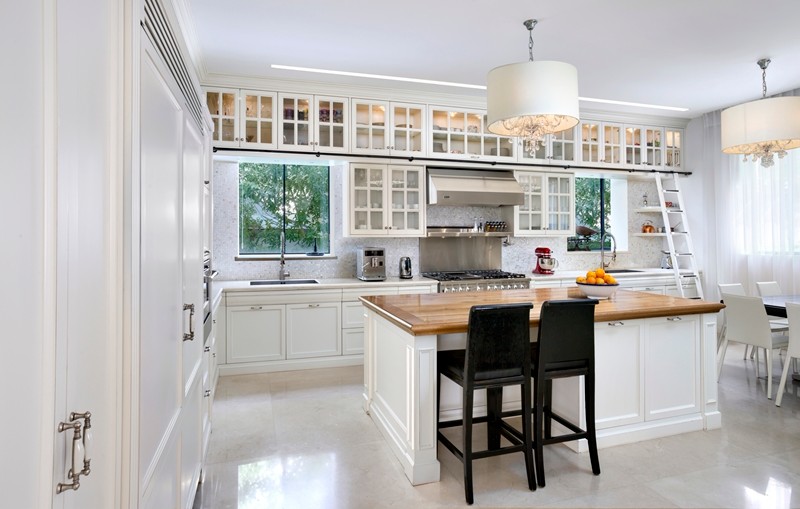
The combination that keeps winning in our showrooms: stained wood on the island or tall wall, painted perimeter. You get grain where hands and eyes linger, and serene color everywhere else — with the painted doors built on MDF so the finish stays crack-free.
Practical takeaways
- Painted five-piece doors need MDF center panels; painted slabs should be one-piece MDF. Solid-wood-plus-paint equals scheduled hairline cracks.
- Both finishes are durable; painted damage is simply more visible and harder to touch up invisibly. Stain plus grain is nature's camouflage.
- Expect painted finishes to cost 10–20% more than standard stains; premium species flip that math.
- Get factory touch-up kits in your batch color at install, and choose a manufacturer who keeps your formula on file.
- Busy, kid-heavy households lean stained or textured; serene, lower-traffic kitchens carry paint beautifully.
The right answer depends on your household, your light, and your tolerance for maintenance — which is a conversation, not a chart. Book a free 30-minute consultation and we'll put painted and stained samples side by side in your hands, or browse our custom kitchens to see both finishes in real homes.