
Whole-Home Cabinetry Packages: Bundling Kitchen, Bath, Closets
Here's a pattern we've watched hundreds of times. A family orders a custom kitchen. Eighteen months later they're back for the primary closet. A year after that, the vanities — "we should have done it all at once, shouldn't we?" Yes. They should have. And not for the reason most people assume (a bundle discount), but for four structural reasons that compound: one design language, one production run, one disruption, and one warranty relationship. Let me make the case honestly — including when bundling is the wrong call.
The hidden cost of piecemeal cabinetry
Every separate cabinetry project you commission carries fixed overhead that has nothing to do with the cabinets: a design phase, site measurement, drawings, delivery logistics, an installation crew mobilizing to your house. Order three projects across three years and you pay that overhead three times — in money, but more painfully in calendar and attention. You also gamble on consistency: finishes get discontinued, suppliers change, and the walnut that matched in the showroom in 2026 may not exist in 2029. Homes assembled piecemeal read that way — a kitchen from one era, closets from another, vanities from a third, each nice, none related.
What bundling actually changes
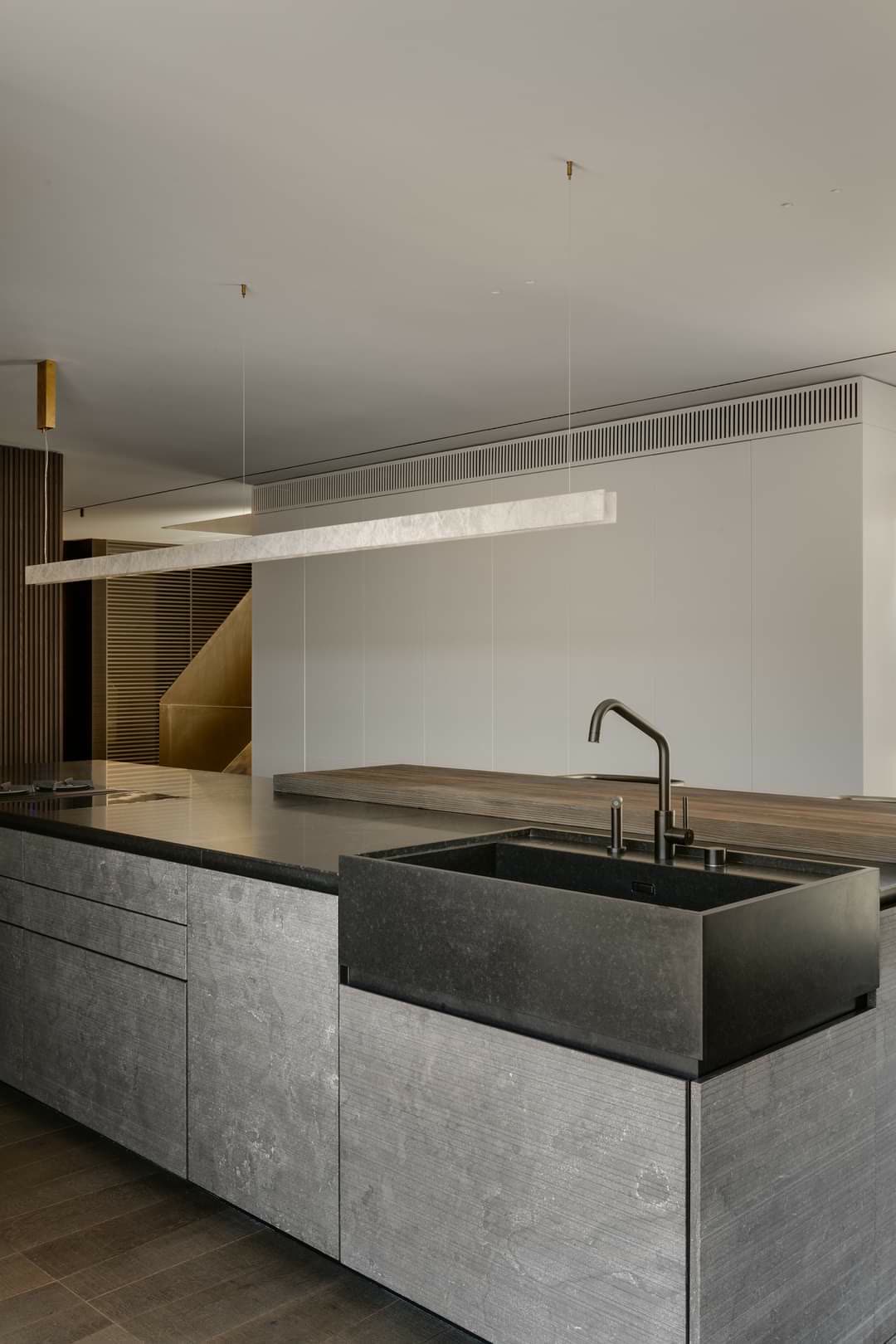
- One design language, held deliberately. When kitchen, closets, vanities, and built-ins are designed together, decisions echo properly: the kitchen's white oak reappears as the closet island; the vanity hardware answers the kitchen's; drawer interiors feel identical in every room because they are. This isn't matchy-matchy uniformity — good whole-home design varies intensity room by room — but variation chosen on purpose is design, and variation accumulated by accident is entropy.
- One design phase and retainer structure. A single design engagement (our retainers start at $3,000, credited to your order) covers the whole scope. Your designer holds the entire home in their head at once — which surfaces opportunities single-room projects miss: the hallway that wants a built-in bench, the awkward bedroom alcove that's actually a wardrobe.
- One production run. All rooms enter our 8–12 week production window together, cut from the same material batches. This is the quiet quality advantage: wood veneer and stained finishes vary subtly lot to lot, and same-batch production is the only guarantee that "matching" means matching. It also means one 50% production deposit event and one delivery to plan around, not three of each.
- One installation mobilization, staggered by room. The crew installs the kitchen first while bedrooms stay livable, then closets and baths in sequence. Compared to three separate projects — each with its own dust, protection, parking, and weeks of your life — a staggered single install adds days, not months, to one disruption instead of three.
- One warranty, one phone number. Every cabinet in the house under the same lifetime warranty, from the same manufacturer, with your finish specifications on file in one place. In year seven, when a closet drawer needs a slide adjusted and a kitchen panel needs a touch-up, that's one visit.
The economics, honestly stated
Does bundling cost less per room? Generally yes, for unromantic manufacturing reasons: shared engineering time, better material yield from cutting multiple rooms out of the same sheets and boards, one delivery, one mobilization. On a home doing a kitchen plus two baths, a walk-in closet, and a media built-in, the efficiency is real money — usually enough to fund an upgrade you'd otherwise have skipped.
But the bigger economic effect is sequencing, not discounting. The alternative to a bundle usually isn't "three well-planned projects" — it's a kitchen now and vague intentions later, and later has a way of costing more: re-mobilization, price inflation between projects, and the eventual compromise of matching discontinued materials. If the master budget genuinely can't cover everything at once, the disciplined move is still to design everything at once — a whole-home design with phased production keeps the language coherent and the specifications on file, so phase two builds from drawings, not archaeology. Our custom kitchen cost guide covers the kitchen line; closets and vanities typically add far less than people fear relative to their daily impact.
When bundling is the wrong call
Honesty clause. Skip the bundle when:
- The kitchen decision isn't settled. The kitchen is the anchor — its materials and mood set the home's language. If you're still torn between directions (start with our custom vs semi-custom vs stock comparison if the torn-ness is about type), settle it before scaling it.
- You're within two years of moving. Kitchens return value at resale; deeply personalized closets and built-ins return less. Renovating for sale is a different playbook than renovating for life.
- The house itself is in flux. If an addition or wall reconfiguration is on the five-year horizon, cabinetry for the affected rooms should wait for the architecture. Design around a moving target and you'll design twice.
- Decision fatigue is real in your household. A whole-home package is a lot of choices in one season. Some clients thrive on it; others make their best decisions one room at a time. Know your team.
How a whole-home project actually runs
- Weeks 1–6: Design. Whole-home walkthrough and measurement, then room-by-room design in priority order — kitchen first, always. One retainer, one designer, one coherent set of drawings.
- Weeks 7–18: Production. Everything manufactured in one run, same batches, one deposit event. Meanwhile your contractor handles site work — remember, you coordinate your own trades and permits, and a single combined scope makes that coordination easier for them too: one drawing package, one schedule.
- Weeks 18–21: Staggered installation. Kitchen, then baths and closets, then built-ins. The house stays livable throughout; the kitchen-less window stays the usual two to four weeks.
- Week 22: One walkthrough, one punch list, one warranty file. Done — everywhere, at once, matching.
Practical takeaways
- Bundling's real value is structural: one design language, one production batch, one disruption, one lifetime-warranty relationship.
- Same-batch production is the only true guarantee of matching finishes across rooms.
- Can't fund it all now? Design it all now, produce in phases. Coherence lives in the drawings.
- Anchor with the kitchen; let closets, vanities, and built-ins vary in intensity on purpose.
- Skip bundling if you're moving soon, the architecture is unsettled, or the kitchen direction isn't decided.
The way to find out what a whole-home package looks like for your house is a walkthrough conversation: book a free 30-minute consultation and bring a floor plan or phone photos of every room you're considering. Then browse the range — kitchens, closets, vanities, and built-ins — and picture them speaking the same language.