
Cabinet Door Styles Explained: Slab, Shaker, Inset, and Beyond
The door is maybe 15% of a cabinet's cost and 90% of what you see. It sets the style of the whole kitchen, drives more of the price than most people expect, and determines how much time you'll spend wiping grooves for the next twenty years. After three decades of building every style on this list, here's the honest tour — what each door actually is, how it's made, what it costs relative to the others, and where it belongs.
Slab: the minimalist workhorse
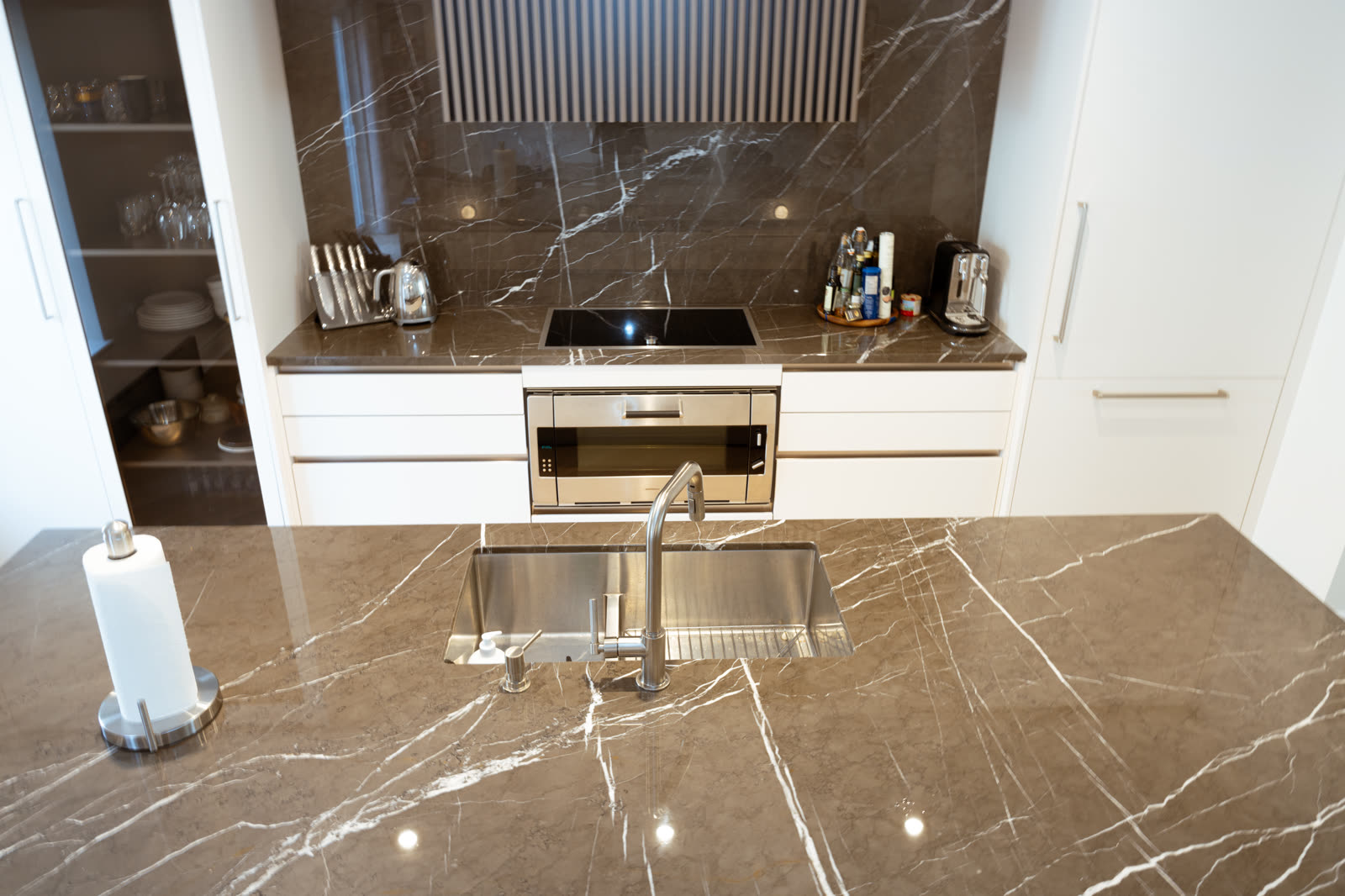
A slab (or flat-panel) door is a single flat piece — no frame, no profile. It's the door of modern and European kitchens, and the honest foundation of the handleless look. Construction matters more here than in any other style: a slab is only as good as the flatness of its core and the quality of its edges. We build slabs from MDF cores for painted finishes (solid wood slabs cup — physics doesn't negotiate) and from veneered or laminated panels for wood and textured looks. What to check on any slab quote: core material, edge treatment (thick, machine-applied edging versus peel-prone tape), and whether grain is matched across adjacent doors. Sequence-matched veneer, where the grain flows continuously across a bank of doors and drawers, is the single detail that separates a luxury slab kitchen from a flat-pack one.
Cost: the baseline — slabs are the least expensive style to make well. Cleaning: the easiest; one wipe, no corners. Ages: extremely well in wood and matte finishes; high-gloss dates fastest.
Shaker: the eternal compromise
A Shaker door is a five-piece frame-and-panel: two stiles, two rails, and a flat recessed center panel. Borrowed from 19th-century Shaker furniture, it's been the best-selling door in North America for two decades because it reads traditional in a cream paint and modern in a matte black — the chameleon of cabinet doors. Variations matter: standard rails run 2-1/4" to 3" wide; a "skinny Shaker" at 1"–1-1/2" reads distinctly more contemporary and is the version we spec most in 2026. A bevel or slight profile where frame meets panel softens it toward tradition.
The honest downside nobody mentions in showrooms: that inside ledge where panel meets frame collects dust and grease, and in painted finishes, the joint between stile and rail can telegraph a hairline over the years as the wood moves — normal, not a defect, but visible in raking light. Cost: 10–20% over slab. Cleaning: one groove per door, four corners. Ages: the safest choice on this list; it has never been out of style in 200 years.
Raised panel: tradition, fully committed
Same five-piece construction as Shaker, but the center panel is thick, profiled, and raised toward the plane of the frame. Add cathedral arches or applied moldings and you're in full traditional or old-world territory. Raised panel demands commitment — it wants crown molding, corbels, and a house with the bones to match. In the right Colonial or estate setting it's correct and handsome; dropped into a flat-ceilinged suburban kitchen as a "fancy upgrade," it's the style most likely to trigger a renovation in fifteen years. Cost: 25–40% over slab, more with applied moldings. Cleaning: the most profile to dust on this list.
Inset: the craftsman's flex
Inset isn't a door profile — it's a fit. The door (slab, Shaker, or beaded) sits flush inside the cabinet face with a fine, even reveal all around, like fine furniture. It's the most demanding fit in cabinetmaking: every reveal is on display, wood movement has nowhere to hide, and doors must be fitted essentially individually. That's why true inset costs 20–30% more than the same door overlaid, and why it's the fastest way to spot a shop's real skill level. Inset pairs naturally with framed construction; if you're weighing that choice, read our piece on frameless vs framed cabinets first, because the two decisions are linked. Ages: beautifully — inset kitchens from the 1920s still look right. Caveat: you trade a little interior space and accept seasonal micro-adjustments.
The textured newcomers: fluted, reeded, slatted
Vertical relief — fine reeds, wider flutes, or spaced slats — moved from furniture into kitchens around 2022 and has matured from trend to established accent. Used on an island back, a coffee-station interior, or a run of tall doors, texture adds shadow play that flat kitchens lack. Used on every door in the room, it's a grease-trap and a visual assault. Our rule: texture on no more than 20% of visible fronts, in a spot your hands rarely touch. Cost: 30–60% over slab depending on method (machined solid wood costs real money; wrapped foils imitate it cheaply and look it).
Glass, mullions, and specialty fronts
A glass door is a frame door with the panel swapped for clear, reeded, or bronzed glass — lovely for the two cabinets holding your best glassware, ruthless toward the cabinets holding your actual life. Mullion (divided-lite) versions lean traditional; frameless glass with aluminum edges leans gallery-modern. Plan interior lighting and finished interiors for any glass cabinet, and budget accordingly: glass doors with lit, finished interiors run two to three times a standard door position.
How door style interacts with material and finish
Not every style suits every material. Painted finishes want MDF panels (no cracking joints); stained and clear finishes want solid wood or fine veneer where the grain is the show — and species choice changes the character of the same profile entirely, as we cover in white oak vs walnut. Thermofoil and laminate doors imitate painted profiles at lower cost with real trade-offs in edge durability and repairability. And if a quote seems suspiciously low for a five-piece painted door, ask whether it's a true five-piece or a routed one-piece MDF door made to look like one — a fine product, but a different product, and it should be priced like one. The same label-versus-substance problem runs through the whole industry; it's the theme of our custom vs semi-custom vs stock comparison.
Choosing: three questions that settle it
- What does the house want? Doors read against architecture. A brownstone tolerates inset beaded doors; a glass condo wants slab or skinny Shaker. Fight the house and the house wins.
- Who cleans this kitchen? Every groove is a weekly appointment. Be honest, then subtract one level of profile from what you were considering.
- Ten-year test: would this door have looked right ten years ago? If yes, it'll likely look right in ten more. Slab, standard Shaker, and inset pass. Whatever is all over Instagram this month usually doesn't.
Practical takeaways
- Cost ladder, roughly: slab → Shaker (+10–20%) → raised panel (+25–40%) → textured (+30–60%) → inset fit (+20–30% on top of the door).
- Painted five-piece doors will show seasonal hairlines at the joints — normal wood behavior, worth knowing before you choose white paint.
- Texture and glass are accents, not wall-to-wall strategies — cap them near 20% of fronts.
- Match the door to the architecture and the cleaner, not the feed.
The fastest way to choose a door is to hold three of them in your hands under your own lighting. Visit any of our nine showrooms or book a free 30-minute design consultation — we build every style on this page in our Canadian factory, finish in-house, and back it all with a lifetime warranty. See finished examples across our custom kitchens.