
Hurricane-Rated Outdoor Kitchens: What That Actually Means
Every June, as the National Hurricane Center starts naming storms, the phrase "hurricane-rated" starts appearing in outdoor kitchen marketing across Florida and the Gulf Coast. Here's the uncomfortable truth I give clients from Bonita Springs to West Palm Beach: there is no official hurricane rating for outdoor kitchens. No stamp, no certification sticker, no single test a cabinet passes to earn the phrase. What exists is engineering — wind load math, anchoring detail, material behavior — and marketing. This post is about telling them apart.
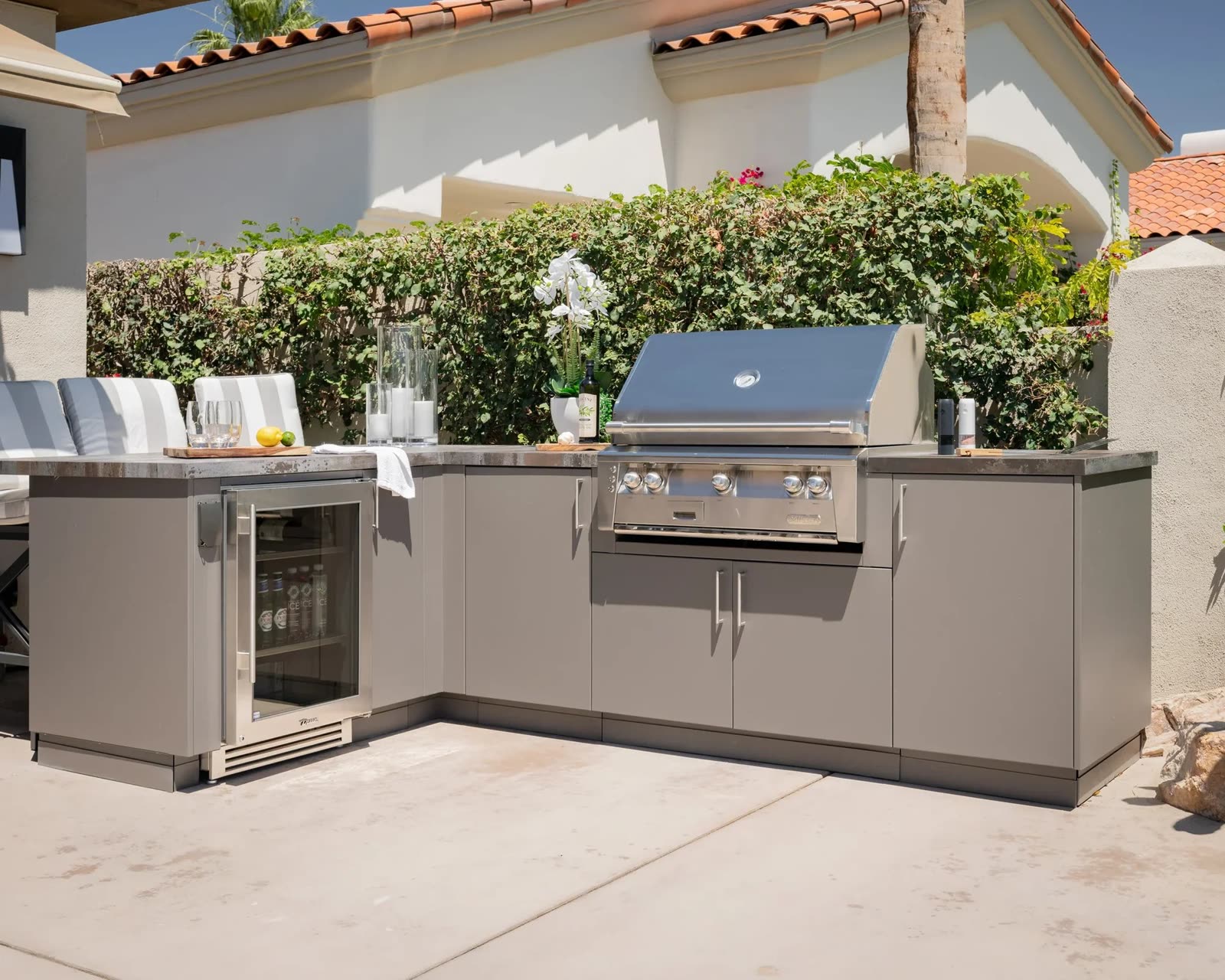
What a hurricane actually does to a patio
Wind damage to outdoor kitchens comes in three modes, and they explain every post-storm photo I've taken in thirty years:
- Lift and slide: wind hitting a solid island generates lateral force and, across its top, uplift. A 120-mph gust loads a 10-foot kitchen with thousands of pounds of push. Unanchored modular units slide, tip, and tumble — through screens, into pools, against houses.
- Opening and sailing: doors held by magnetic catches pop open around 50–60 mph. An open door is a sail and then a projectile; an open cabinet scoops wind and rain into everything it holds.
- Missile damage: your kitchen isn't just at risk from wind — it's hit by whatever the neighborhood launches. Dense, heavy-gauge construction shrugs off impacts that puncture thin skins and shatter tile veneer.
Then comes the aftermath, which does more cumulative damage than the wind: storm surge and rain flood cabinet interiors, and salt-laden spray coats every surface miles inland. Kitchens that "survived" the storm rust out in the following six months because nobody rinsed them — the corrosion chemistry from our salt-air guide, delivered in one afternoon instead of a decade.
The engineering that actually matters
Anchoring is nine-tenths of it. A hurricane-serious kitchen is mechanically fastened to the slab — stainless anchors into concrete, engineered for uplift, not gravity-set pavers and hope. This is where welded construction earns its keep: a welded marine-aluminum kitchen behaves as one continuous structure, so anchor points load the whole assembly, while modular units connected by screws separate into individual projectiles at their weakest fastener. It's a core argument in our construction comparison, and storm seasons keep re-proving it.
Positive latching. Every door and drawer needs a mechanical latch that holds against suction — not magnets, not friction. Our coastal builds use compression latches; drawer systems ride on runners that lock home (the stainless-rated Blum and Hettich hardware we fit has genuine closed-position retention, one of the unglamorous reasons we specify it).
Mass and profile. Low, long kitchens survive; tall, top-heavy features suffer. Masonry's mass is a real storm asset — the block core rides out anything — though its veneer, doors, and attached wood structures remain the weak points. And everything above counter height needs scrutiny: pergolas want engineered footings and through-bolts, louvered roofs have a manufacturer storm protocol (usually blades open), and fabric shade should already be in the garage — the wind rules from our pergola guide stop being theoretical in September.
Utilities designed for shutdown. A master gas shutoff you can reach in ninety seconds, appliance-level valves, and GFCI electrical that tolerates a soaking — the rough-in details from our utilities guide are also storm prep.
Flood zones change the answer. Seaward of the coastal construction control lines and in VE flood zones, appliances mounted low — fridges especially — are presumed losses in surge. We've designed kitchens where refrigeration sits in the elevated summer kitchen and the patio level stays surge-tolerant: welded aluminum, stone, and nothing electrical below the flood elevation. If you're on the water, design for the water.
Codes, permits, and insurance — the paper that matters
Florida's building code takes wind seriously, and permitted outdoor kitchen structures (roofs, pergolas, attached summer kitchens) get engineered wind-load review — one more reason permits are a feature, not friction. Freestanding cabinetry mostly escapes structural review, which means your builder's engineering judgment is the only engineering it gets. Ask the questions: How is this anchored, and to what? What holds the doors shut at 60 mph? What's the documented wind behavior of the shade structure? A builder with answers has thought about it; a builder waving the phrase "hurricane-rated" has a brochure.
On insurance: document the kitchen (photos, invoices, serial numbers) before the season, confirm with your carrier whether it's covered under dwelling or other-structures provisions, and keep the permit records. Post-storm claims go smoothly for owners with a file and badly for owners with memories.
The pre-storm checklist we give every coastal client
- 72 hours out: inventory loose items — stools, umbrellas, planters, countertop appliances, the pizza oven peel — and stage them for the garage. Anything you can lift, the wind can throw.
- 48 hours: empty and secure refrigeration (contents to the house), latch every door and drawer, remove and stow shade fabric, set louvered roofs to storm position.
- 24 hours: shut gas at the master valve, kill the kitchen's electrical circuits at the panel, strap or remove grill covers (a loose cover is a flail), final walk-through with the camera.
- After: photograph everything before touching anything; then fresh-water rinse the entire kitchen — cabinetry, counters, appliance exteriors, hinges — before corrosion sets its hooks; open cabinets to dry; inspect gas lines before relighting, and let the utility or plumber bless anything questionable.
What we've actually seen after storms
Theory is fine; the post-storm service calls are the education. After the recent big seasons, our crews walked dozens of coastal properties, and the pattern was monotonously consistent. Anchored, welded kitchens with latched doors: pressure-wash, hinge lubrication, occasionally a new appliance panel — back in service the same week. Modular stainless units zip-tied to hope: found in pools, screens, and neighbors' yards, with the surviving boxes rusting at every scratch within months. Masonry islands: structures intact and standing proud, veneer cracked at corners, and every steel access door either rusted or gone — sails, remember. Pergolas told the same story from overhead: engineered aluminum with through-bolted footings stood; fastened-to-the-deck kits folded; and every fabric canopy that stayed up "because it was just a tropical storm" ended the day as expensive confetti. None of this is luck. Wind is an honest examiner — it grades exactly the details this post lists, and it never curves the score. The owners who fared best shared one more trait: they had rehearsed the checklist above once on a calm Saturday, so when the cone of uncertainty arrived, securing the kitchen took an hour instead of a panicked afternoon.
Practical takeaways
- "Hurricane-rated" is marketing; anchoring, latching, mass, and materials are engineering. Buy the second.
- Welded, slab-anchored marine aluminum behaves as one structure; modular screwed units become many projectiles.
- Compression latches beat magnets the moment winds pass 50 mph.
- Surge zones demand low-value-low, electrical-high design — and everything gets rinsed after every storm.
- Ask your builder the three wind questions; the quality of the answers is the rating.
We've been building anchored, welded marine-grade aluminum outdoor kitchens through Florida storm seasons for years — and pressure-washing, not rebuilding, is what our clients do afterward. Explore our outdoor kitchens, or book a free 30-minute design consultation and we'll talk honestly about what your site needs before the next named storm does.