
Outdoor Refrigeration: What Actually Survives Outside
Here's a pattern I've seen dozens of times: a client spends handsomely on a beautiful outdoor kitchen, then slides a $200 garage fridge into the cabinet opening "for now." Eighteen months later the fridge is dead, the cabinet interior is streaked with rust from its cheap steel shell, and now we're rebuilding a cutout for a properly sized unit. Refrigeration is where outdoor kitchens most often go wrong, because the differences between indoor and outdoor units are invisible on the sales floor — and enormous in August.
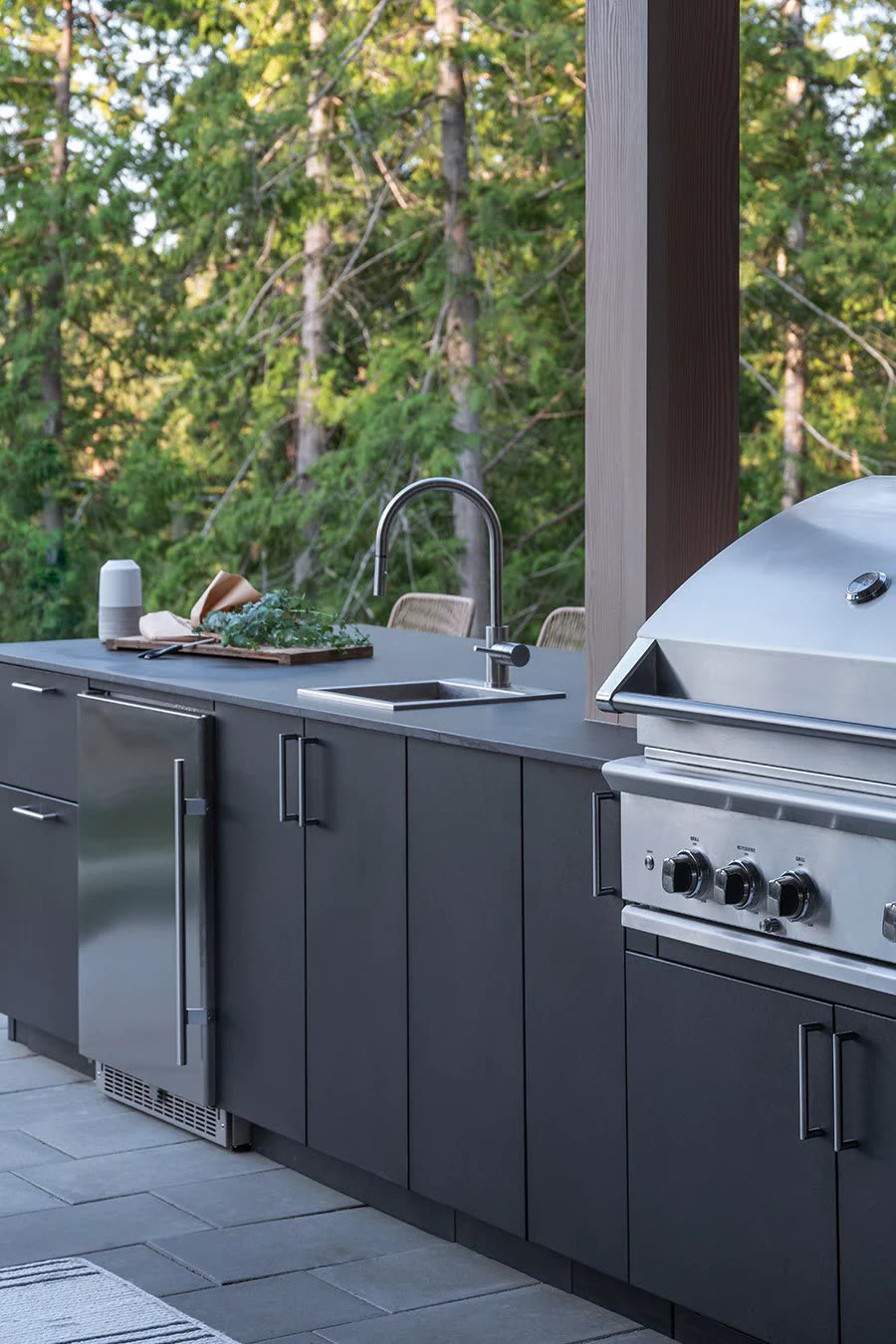
Why indoor fridges die outdoors
A refrigerator is a heat pump: it moves heat from the box to the coils, and its whole design assumes the room around it stays about 70°F. Put that machine on a 95°F patio in direct sun and three things happen. The compressor, sized for a 25-degree lift, now fights a 60-degree one and runs almost continuously until it burns out. The door gaskets and plastic liner, never formulated for UV, embrittle and crack. And the carbon-steel cabinet under the painted skin starts rusting the first humid week. Cold weather kills them differently: below about 40°F ambient, an indoor fridge's thermostat thinks its work is done and stops running — and the freezer section thaws while the fridge freezes.
There's also a safety and code point people miss: outdoor-rated units carry electrical listings for damp environments (GFCI-protected circuits, sealed components). An indoor fridge on a patio can void insurance coverage, not just the appliance warranty.
What "outdoor-rated" actually means
The label to look for is a UL 471 commercial listing for outdoor use — not the words "indoor/outdoor" on a box. A genuine outdoor unit has: a 304 stainless body and back panel (cheap units hide galvanized steel where you can't see it), a forced-air compressor sized to hold 34–40°F in 100°F+ ambient, UV-stable gaskets and interiors, sealed electronics, and front venting — which matters enormously, because a built-in unit has no room to breathe out the back. Expect $1,500–$4,500 for a quality 24-inch undercounter unit. Yes, that stings next to a garage fridge. It's also the last one you'll buy for 10–15 years.
On the coast, apply the same scrutiny you'd apply to cabinetry: 304 stainless will tea-stain in salt air even on good units, so wipe-downs matter, and position refrigeration out of direct spray. The full salt-air story is in our Florida materials guide.
The refrigeration menu, ranked by usefulness
- Undercounter refrigerator (24"): the workhorse. Holds proteins, produce, and a case of drinks. If the kitchen gets exactly one refrigeration unit, it's this.
- Beverage center: glass door, display racking. Great second unit for entertainers; poor primary, because glass doors lose cold and can't hold food-safe temps as reliably in heat.
- Refrigerated drawers: the ergonomic favorite — chest-height access, superb in island layouts. Costly per cubic foot but clients love them daily.
- Outdoor ice maker: the luxury that gets used more than any other. Clear-ice units need a drain line — plan it at rough-in, as covered in our utilities guide.
- Kegerator: wonderful for the right household; insist on a true outdoor listing, because the tower and lines suffer in heat.
- Freezers outdoors: the honest answer — rarely worth it. Holding 0°F on a hot patio is brutal duty; most clients are better served by ice retention and the indoor freezer twenty steps away.
- Wine storage: not outdoors, ever, in hot climates. Wine wants 55°F and stability; a patio delivers neither. Put the wine fridge inside and carry bottles out.
Installation: where good units get killed
Half the outdoor fridge failures I see are installation failures, not product failures. The rules our crews build by:
- Shade the box. Direct afternoon sun on a fridge door adds a constant heat load. Position refrigeration on the shaded side of the island or under the counter overhang — never beside the grill. Keep at least 18 inches (ideally a full cabinet bay) between fire and cold, and put an insulated cabinet panel between them.
- Respect front venting. Built-in means zero clearance on sides and back — but the front toe-kick grille must stay unblocked. Decorative panels that choke the vent cook the compressor.
- Level, sealed, and drained. The unit sits level on a sealed base; the cabinet bay around it needs a drainage path so a spilled margarita or wind-driven rain doesn't pool under the compressor.
- Dedicated GFCI circuit. A fridge sharing a circuit with a blender and patio heater trips exactly when the fridge is full of brisket.
- Coil rinse twice a year. Condensers die of dust and salt-caked coils, not old age. Pull the grille, rinse gently, done.
Winter and the off-season
In freeze climates, even outdoor-rated fridges have winter protocols: most manufacturers want units emptied, cleaned, unplugged, and left slightly open (mold prevention) once ambient stays below freezing — a few premium models are rated to run through winter, but check the manual, not the brochure. Water-connected units (ice makers, kegerator lines) must be drained and blown out with the rest of the kitchen's plumbing. Our Northeast winter guide covers the full shutdown ritual.
Budgeting refrigeration sanely
In a typical project, refrigeration lands at 8–15% of total spend: an undercounter fridge plus ice maker runs $3,000–$7,500 at quality level. Skip refrigeration entirely in a small kitchen before you buy a cheap unit — a beautiful drawer stack on soft-close runners (we fit Blum and Hettich stainless-rated hardware) holding a quality cooler is genuinely a better budget play than a fridge that dies in two summers. The full project math is in our cost breakdown.
How much cold do you actually need?
A sizing exercise we run with every client, because refrigeration is bought emotionally and used practically: count the longest realistic party, not the average Tuesday. A 24-inch undercounter unit holds roughly 5.5 cubic feet — call it six cases of drinks or a party's worth of proteins and sides, not both. If your entertaining pattern is twelve people monthly, one fridge plus a well-iced cooler bin covers it. If it's thirty people weekly, that's a fridge for food, a beverage center for drinks, and an ice maker running since morning — about 15 cubic feet of dedicated cold. What almost nobody needs is the outdoor French-door showpiece: full-size outdoor refrigerators exist, cost as much as a good grill, and mostly store the same condiments a $12 caddy carries out from the house. Spend the difference on ice capacity; parties die of warm drinks, never of small fridges.
Practical takeaways
- Indoor and garage fridges die outdoors — heat, UV, humidity, and cold all kill them differently.
- Look for UL 471 outdoor listing, full 304 stainless (including the back), and front venting.
- One good undercounter fridge beats three cheap boxes; ice makers earn their keep, outdoor freezers rarely do.
- Shade it, vent it, give it its own GFCI circuit, and keep it away from the grill.
- Wine stays indoors. Your Bordeaux did not sign up for August.
Every iKitchen outdoor kitchen is designed with refrigeration bays built to your exact units, with engineered venting and drainage in welded marine-grade aluminum. See our outdoor kitchens, or book a free 30-minute design consultation and we'll spec refrigeration that will still be cold a decade from now.