Kitchen Trends 2026: What Designers Are Actually Specifying
Trend articles are usually written from mood boards. This one is written from an order book. We build custom cabinetry for designers, architects, and homeowners across nine showrooms in the US and Canada, which means our production schedule is a fairly honest census of what North America is actually paying for — not what photographs well in a January "trends" roundup and never gets ordered. Here's what's genuinely moving through the shop in 2026, what's cooling, and my candid read on what will still look right in fifteen years.
1. Warm wood is the new neutral — and it's rift oak's world
The defining shift of this decade continues: wood tone has replaced white as the default "safe" kitchen. Roughly half our current orders carry natural wood on at least the island or a feature wall, and rift-cut white oak dominates — that straight, tailored pinstripe grain, finished nearly raw in ultra-matte. Walnut holds the luxury tier. What's new in 2026 is the warming of the palette: less grey-washed Scandinavian pallor, more honey, amber, and caramel tones. Clients are asking for wood that looks like wood in afternoon light, not wood that looks like concrete. The full oak-versus-walnut decision — color drift, cost, cut — is one we've written up in depth in White Oak vs Walnut.
2. Texture is the new color
The most-requested door detail of 2026 isn't a color at all — it's relief. Fluted, reeded, and slatted fronts keep spreading from islands and bar cabinets onto full elevations, because they solve a modern problem elegantly: a flat-slab minimal kitchen can feel cold, and texture restores warmth without adding ornament. The craft caveat we repeat weekly: machined texture multiplies finishing labor (every groove is sprayed, sanded, and inspected as its own surface) and it collects dust at a rate proportional to its beauty. Use it where hands and light touch it — the island back, the tall pantry wall — and keep working runs smooth. Our fluted fronts guide covers profiles, substrates, and cleaning honestly.
3. The stone got loud
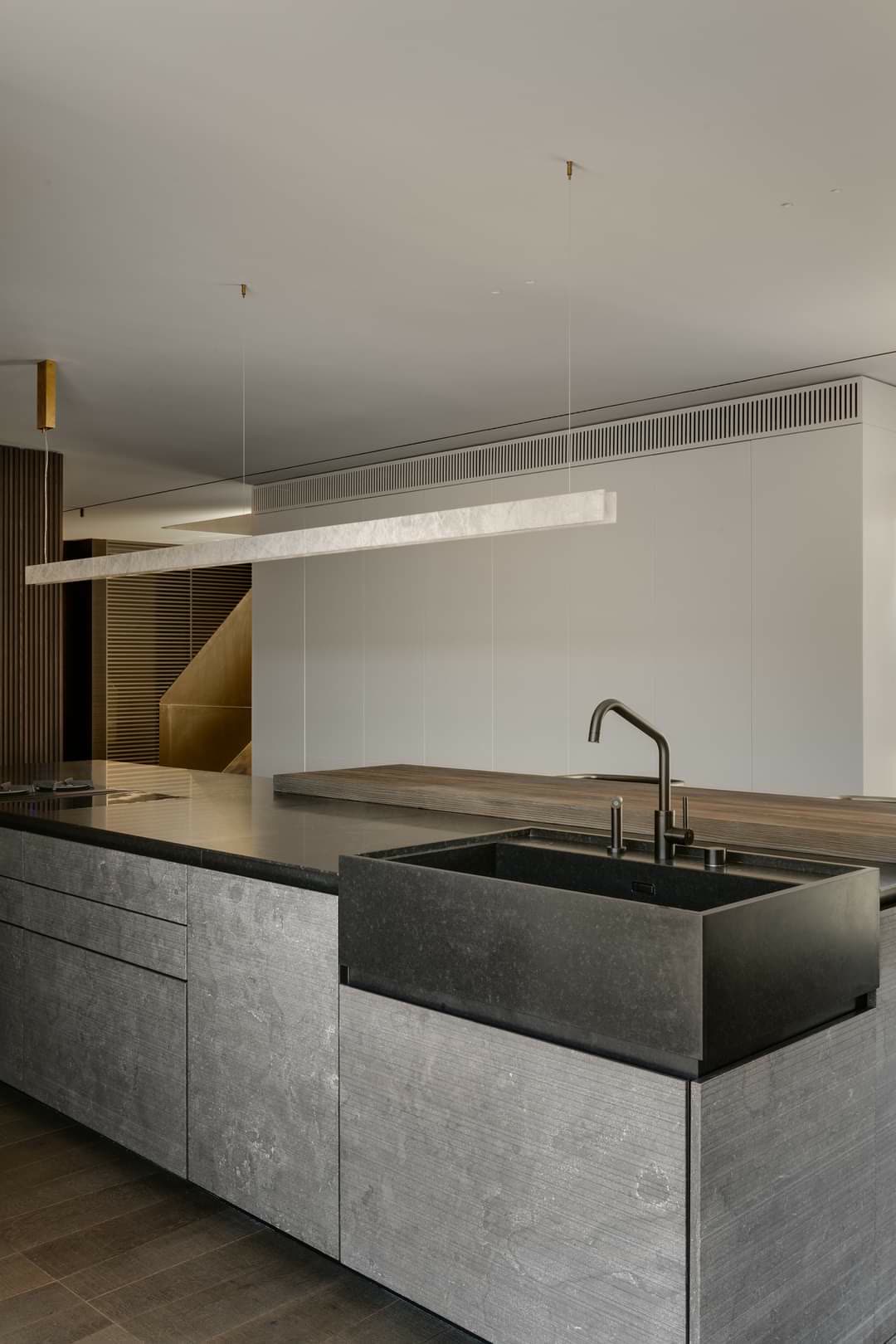
After a decade of quiet white quartz, countertops have found their voice: heavily veined quartzites and marble-look porcelains, in full waterfall wraps and — the 2026 signature — run up the wall as full-height backsplash. The stone is now the kitchen's art, and cabinetry is deliberately calming down around it: flat fronts, minimal hardware, muted color, letting one dramatic slab carry the room. This is a healthy rebalancing. A kitchen can afford exactly one diva; when clients want loud stone and loud cabinetry and loud floors, our job is to referee.
4. Color: browns, greens, and the cream consensus
Painted kitchens haven't disappeared — they've deepened. The 2026 painted palette in our booth is chocolate and espresso browns (the year's genuine newcomer), olive and forest greens holding strong from 2024–25, and a warm cream-off-white consensus replacing stark white on perimeter runs. Paint-brand color-of-the-year picks tell the same story — the Benjamin Moore and Sherwin-Williams announcements have circled warm earthy tones for three straight years — and clients now bring those chips to their first meeting. Fine by us: any color a Farrow & Ball or PPG fan deck can imagine, a catalyzed factory finish can match, with far more durability than a site-painted door. Whether white is dead (it isn't) gets its full hearing in White Kitchen Cabinets: Timeless or Tired?.
5. The kitchen is hiding itself
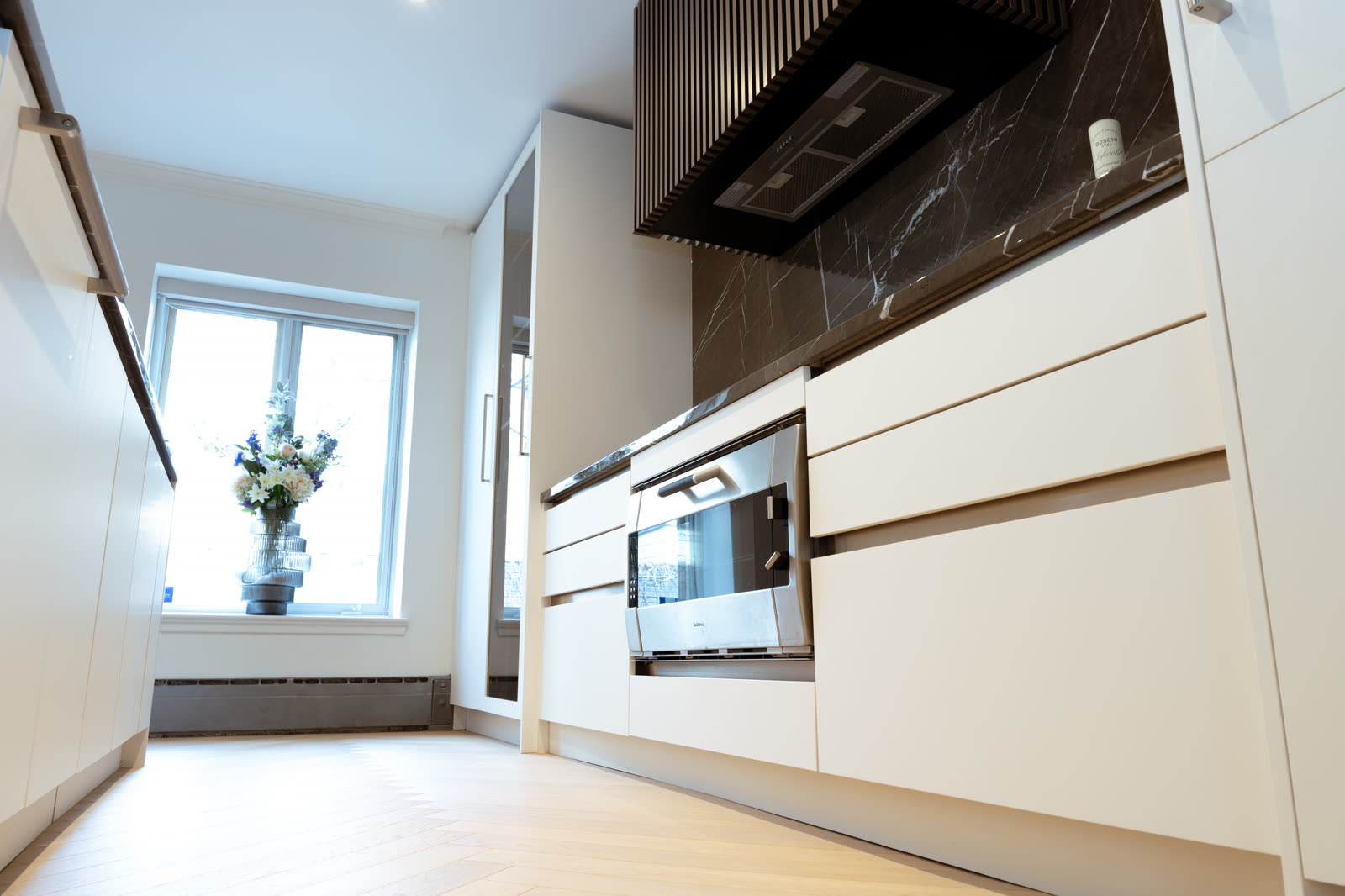
The strongest architectural current of 2026: kitchens engineered to disappear. Panel-ready appliances behind matching fronts. Appliance garages with pocketing doors swallowing the countertop fleet. Full-height cabinet walls that read as paneling. And at the top of the market, the working scullery behind the show kitchen taking the mess offstage entirely — a room we unpack in The Butler's Pantry Comeback. The through-line is that open-plan living made the kitchen permanent scenery, and scenery needs stagecraft. Expect the pocket-door breakfast cabinet to become as standard as the pantry pull-out within five years.
6. Hardware: less of it, warmer where it stays
Handleless continues its march — channel rails, machined pulls, push-to-open — but where handles remain, the finishes have warmed decisively: unlacquered brass, bronze, and burnished nickel over polished chrome, often mixed deliberately in one room. Inside the cabinet, the trend is simply more motion: soft-close is assumed, electric opening on bins and heavy drawers is the new upsell that clients keep after trying once. The mechanisms behind all of it are compared in our handle-free kitchens guide.
7. Lighting became cabinetry's job
In 2026 the electrician's plan and the cabinet plan are one document. Integrated LED — under uppers, inside glass cabinets, in toe kicks, along floating shelves — has moved from upgrade to expectation, and the quality bar has risen: high-CRI strips, proper aluminum channels with diffusers so you see light instead of dots, and warm-dim drivers that shift from 3000K work light to 2200K evening glow. Cabinetry has to be built for it: wire chases, driver cavities, and shelf-edge routing all happen in the factory now, not on site with a spade bit.
What's quietly cooling
- The raised-bar two-level island keeps fading; single-level slabs with generous overhangs won.
- Grey — full stop. Grey cabinets, grey floors, greige walls: the 2015 uniform now dates a kitchen faster than oak cathedral grain dated the 1990s.
- Open shelving as a storage strategy. Two beautiful styling shelves, yes. A whole wall of your dishes on display, no — the market has admitted it was always a photo-op.
- Ultra-high gloss. Fingerprint fatigue is real; super-matte took its seat and isn't giving it back.
- Pot fillers — installed constantly, used rarely; clients who've had one rarely re-order one. Real plumbing money now goes to the scullery's second dishwasher instead.
How to use trends without being used by them
The manufacturer's rule of thumb, offered free: put trends in the things you can change cheaply, and timelessness in the things you can't. Cabinet boxes, layout, and door construction should be built to outlive four backsplashes — that's a 25-year decision. Wood species and great proportions age gracefully by nature. Paint color is a refinish, hardware is an afternoon, lighting temperature is a driver setting, and stools are a shopping trip. A rift oak or cream kitchen with a disciplined layout can chase every trend of the 2030s through its accessories without a single box leaving the wall. The kitchens we're asked to rip out at year eight are almost always the ones that committed their permanent layer to a temporary fashion.
Practical takeaways
- Warm wood — especially rift white oak — is the 2026 default; the palette has warmed from grey to honey.
- Texture (fluting, reeding) and dramatic stone carry the drama; cabinetry is calming down around them.
- Painted color has gone earthy: browns, greens, creams — matched in durable factory finishes, not site paint.
- Concealment is the architecture story: panel-ready appliances, appliance garages, sculleries.
- Spend permanence on boxes and layout; spend trend on finishes, hardware, and light.
The best trend advice is specific to your house, your light, and your decade. Book a free design consultation to talk through what's worth adopting — or wander the finishes library and our custom kitchens to see 2026's directions built and lived in.