
Poolside Kitchens: Codes, Clearances, and Materials
The pool and the outdoor kitchen are the two gravitational centers of a backyard, so of course clients want them together — burgers to the swimmers, a bar with a view of the cannonballs. It's a wonderful combination, and it's also the most regulated, most chemically hostile, and most safety-sensitive spot on the property to put appliances, electricity, and glassware. A poolside kitchen designed like an ordinary patio kitchen is a set of code violations waiting for an inspector and a set of hazards waiting for a barefoot seven-year-old. Here's how we design them so nobody ever thinks about any of that.
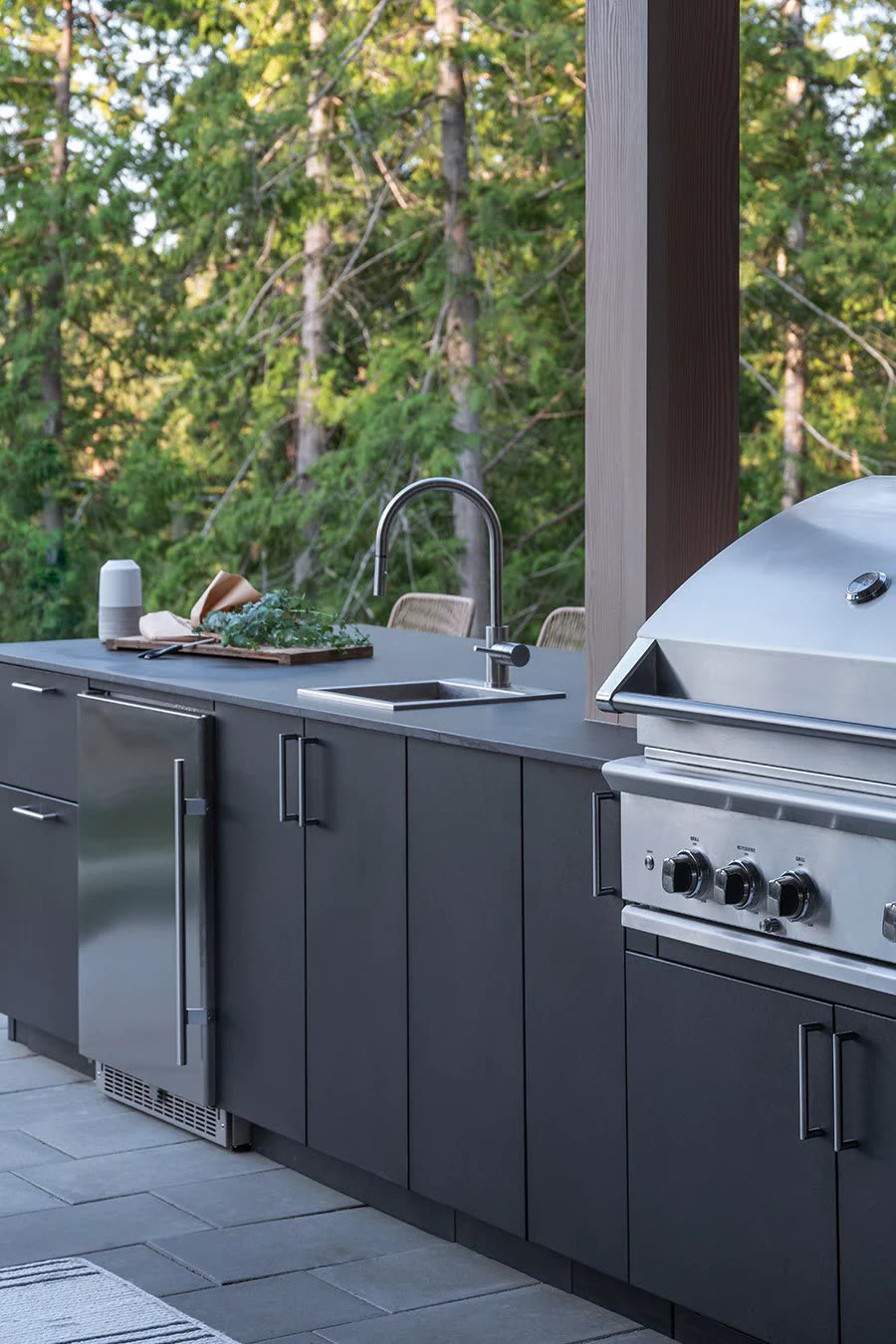
The electrical rules are the design
Water and electricity share a rulebook, and near pools it's strict. The National Electrical Code (Article 680) governs everything electrical within reach of pool water, and while your electrician owns the details, the designer must respect the geography: receptacles generally can't live within 6 feet of the water's edge (and must be GFCI within 20 feet); switches keep their distance; fixed appliances — that outdoor fridge, the ice maker, the blender outlet at the swim-up bar — need placement that satisfies both the code and common sense about wet hands. Metal components within 5 feet of the pool may need bonding to the pool's equipotential grid — a real conversation to have when specifying a metal kitchen near the coping, and one your builder should raise before the inspector does.
The practical consequence: the kitchen wants to sit at least 6–10 feet back from the waterline anyway — for splash, for traffic, for towels dripping past the prep counter — so let the code minimums and good design agree. We typically zone it: bar and refrigeration on the pool-facing side at a compliant distance, fire pushed to the far side of the layout, away from both water and the wet deck. Local codes layer on top (some jurisdictions add fuel-fired appliance setbacks from water; screened-pool country adds its own rules about grills under enclosures), which is one more reason poolside projects should be permitted, licensed-trade work — the position we argue for all utilities in our rough-in guide.
Glass never, and other service realities
Every commercial pool in America bans glass on the deck, and they're right: a dropped glass near a pool doesn't just make a mess — invisible shards migrate into a place where everyone is barefoot and the bottom of the pool hides everything. Home decks deserve the same rule. We design for it rather than nag about it: the poolside bar gets stocked with quality polycarbonate and stainless drinkware (the good stuff is genuinely nice now), stemless silicone-sleeved options for wine, and a dedicated drawer for it so the glass glassware simply never migrates from the far bar. If there's a full outdoor bar in the project, the pool side gets the unbreakable service and the covered dining side keeps the crystal — a split our outdoor bar guide covers in the satellite-bar layout.
Chlorine is a second climate
Everything we've written about salt air applies at the pool with a twist: chlorine and salt-system pools generate their own corrosive microclimate. Splash, evaporation, and the drift off a heated pool carry chloramines onto every nearby surface — and chlorides attack 304 stainless even faster than seaside air does. The material consequences:
- Cabinetry: powder-coated marine-grade aluminum is at its very best here — chloride-indifferent, no crevices for chemistry to work on, and a rinse-clean surface. It's the same argument as our salt-air guide, compressed into a ten-foot radius.
- Stainless components: 316 grade for anything within splash range; expect tea-staining on 304 appliance faces near salt-system pools and put them on the leeward side of the island.
- Counters: sintered stone and granite shrug off pool chemistry; pick light colors for barefoot-adjacent surfaces — the too-hot-to-touch math from our countertop guide matters double where people stand barefoot.
- Deck interface: the kitchen's floor zone should match the pool deck's slip rating — honed, textured, never polished — and the kitchen must not dam the deck's drainage plane. We hold cabinet toe-kicks off the deck on leveled, sealed bases so wash-down water and splash pass under, not into.
Layout: feeding swimmers without crossing streams
The choreography problem unique to poolside: two traffic systems — wet and dry — that shouldn't intersect. Wet traffic runs pool → towel → bar stool → bathroom; dry traffic runs kitchen door → prep → grill → table. When the grill sits between the pool steps and the towel station, dripping children sprint past open flame all afternoon; when the bar faces the water with stools on the dry side, the systems never touch. Three rules we design by: fire farthest from water (both for code setbacks and because swimmers can't smell a hot grill they're about to lean on), the refrigerator reachable by wet hands without entering the cooking zone — a drinks fridge or drawer at the bar end solves the single most common poolside traffic jam — and sightlines from the cook to the water, because at a family pool the griller is usually also the lifeguard. That last one is non-negotiable in our layouts: the cook faces the pool, always, a principle that echoes the guest-facing geometry in our layout guide.
The swim-up bar, honestly assessed
Resort swim-up bars sell more pool renovations than any other photo, so here's the builder's honest take. In-pool stools and a wet-deck counter are buildable and genuinely delightful — but the bar structure itself must be on the dry side with a full walkway behind it (a bartender standing in the pool serves two drinks and retires), everything within reach must be unbreakable and electrically compliant, and the counter needs 18–24 inches of depth on the swimmers' side for elbows and plates. Budget honestly: a true swim-up configuration touches pool structure, waterproofing, and finish work that lands well beyond cabinetry. For most families, a poolside bar facing the water at deck level delivers 90% of the joy at 30% of the cost — and the drinks stay colder because the bartender isn't rationing trips.
Storage for the pool life
A poolside kitchen ends up storing a second household's worth of gear, and designing for it is what keeps the deck looking like the renderings. We build dedicated bays into the pool-facing cabinetry for the things that otherwise colonize every counter: a towel cabinet with ventilated shelving (sealed but breathing, so damp towels dry instead of souring), a sunscreen-and-goggles drawer at kid height, deep bins for pool toys that would otherwise live in a cracking plastic deck box, and a charging drawer with outlets for the speakers and phones that follow every pool day. Two specification notes make it work: everything gets marine-grade gaskets because chlorinated splash and wet hands are the environment, not the exception; and interiors are the same powder-coated aluminum as the shells — no laminate, no raw wood shelving, nothing that minds a wet swimsuit thrown where it doesn't belong. The unglamorous storage bays get used more, daily, than the ice maker — and they're why the beautiful parts stay beautiful.
Practical takeaways
- NEC Article 680 geography shapes the plan: keep receptacles and appliances at compliant distances and bond metal near the water — permit it, always.
- Glass never crosses the wet deck; design the storage so unbreakables are the path of least resistance.
- Chlorine is concentrated salt air: marine aluminum cabinetry, 316 fittings, sintered or granite tops, light colors for bare feet.
- Separate wet and dry traffic; fire farthest from water; cook faces the pool.
- A deck-level bar facing the water beats a swim-up bar on value — build the swim-up only if you'll staff it.
We design poolside kitchens and bars across the Sun Belt — welded marine-grade aluminum, code-aware layouts, and materials that ignore chlorine. Explore our outdoor kitchens, or book a free 30-minute design consultation with your pool survey in hand — we'll place every element the inspector and the seven-year-old can both live with.