
Luxury Closet Trends 2026
Trend articles usually report what magazines photograph. This one reports what people pay for — the patterns in our own order book across nine showrooms in the US and Canada, halfway through 2026. The two lists overlap less than you'd think. Photogenic ideas arrive in the press two years before they arrive in orders, if they ever do; meanwhile the real shifts — quieter, more structural — show up first in what clients ask for twice. Here's what's genuinely moving, what's peaking, and what we're quietly talking people out of.
Trend one: the closet joins the architecture
The biggest shift isn't a finish — it's status. Closets have stopped being a line item at the end of a renovation and started being designed with the kitchen and bath as one material story. Clients now bring closet Pinterest boards to kitchen consultations. In practice this means closets specified in the same design contract, the same wood tones or a deliberate echo of them, one hardware finish family through the whole house. It's why we fold closets into whole-home cabinetry packages — one retainer (from $3,000, credited), one 8–12 week production run, one install crew. The dressing-room conversion — a spare bedroom surrendered to wardrobes — is the flagship version of this trend and our fastest-growing closet project type (our conversion guide covers it start to finish).
Trend two: warm wood interiors, cool restraint outside
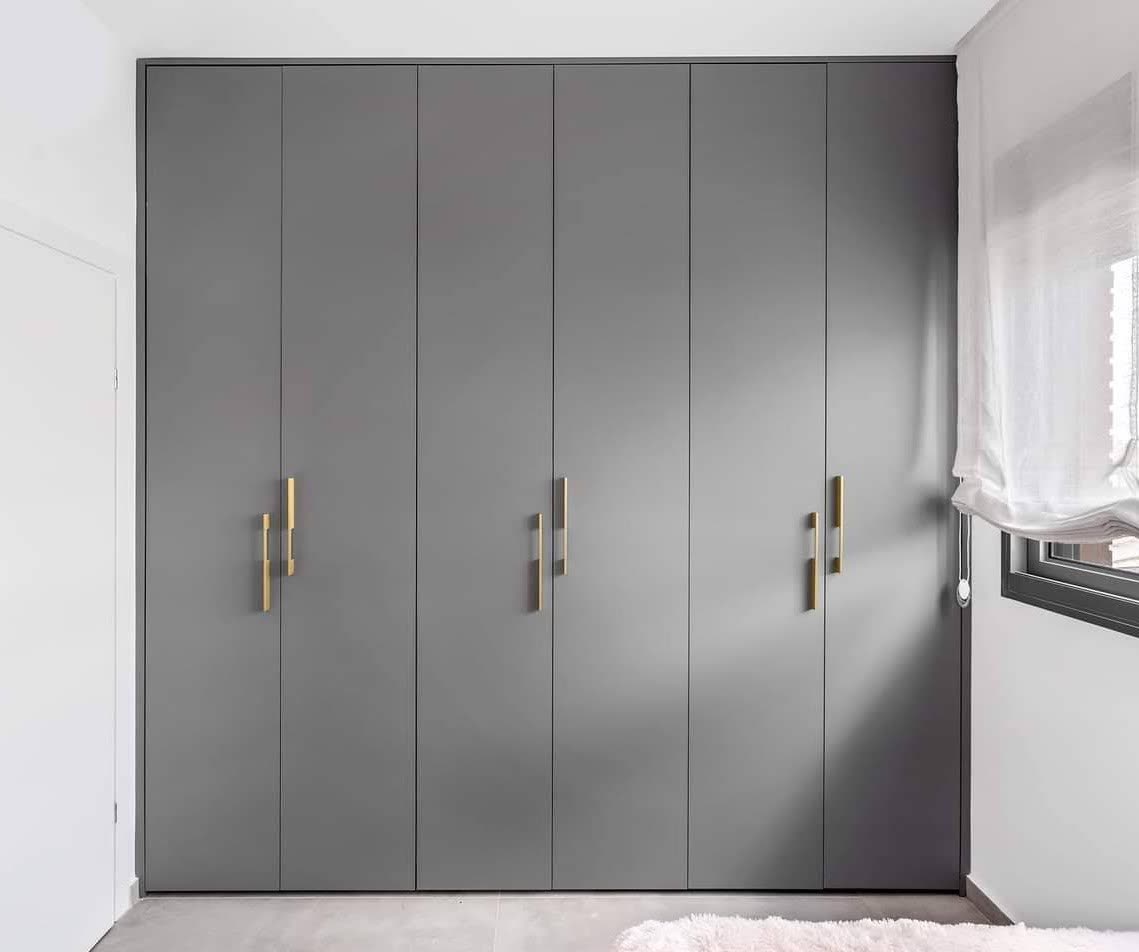
The all-white closet interior — default for twenty years — is in genuine retreat. The 2026 order book is walnut-toned and natural-oak textured melamine inside, often against painted or matte exteriors in muted clay, sage, and greige. The logic is sound, not just fashionable: clothes read beautifully against mid-tone wood (white interiors glare under LED strips; dark ones swallow garments), and textured woodgrain hides the scuffs of daily use far better than white. High gloss has all but vanished from closet orders — fingerprints on doors opened with armfuls of fabric were always the argument against it, and matte's dominance across cabinetry generally (see matte vs gloss) has settled the question. Hardware follows the house trend: brushed brass holding steady, matte black maturing into a classic, chrome nearly extinct in closets. Browse the current palette in our finishes library.
Trend three: lighting as standard equipment
Three years ago integrated lighting was an upsell; in 2026 it's in more than half our closet orders, and clients arrive asking for it by spec — sensors, 4000K, lit rods. The vitrine effect (glass-front towers with interior lighting for bags and shoes) is the single most-requested photo clients bring us. What's changed under the hood: sensor-per-zone control has become standard in shared closets, and the dim night mode — 10% brightness for early risers — is the feature people mention at the final walkthrough. Full specs in our closet lighting guide; the boutique styling framework around it in our dressing-room look guide.
Trend four: display shrinks, storage discipline wins
A correction is underway. The 2022–2024 era of the all-display closet — open shelving everywhere, handbags under museum glass, sixty pairs of shoes on angled ramps — is being renovated away by the very clients who ordered it. What replaced it in the order book: the 20/80 ratio (one curated display moment, dense beautiful storage everywhere else), drawers regaining ground from open shelves, and doored wardrobe sections returning for real-life clutter. Related: the closet island is being specified more honestly — smaller, or replaced by the peninsula and the dresser wall in rooms that can't hold 36-inch clearances (the math that decides it is in our closet island guide).
Trend five: quality literacy
The most encouraging trend to a manufacturer: clients have learned the vocabulary. They ask what the drawer boxes are made of. They ask whose runners we use — and recognize the answer (Blum and Hettich, exclusively, same as our kitchens, lifetime warranty). They ask where fabrication happens (our own facilities in the USA and Canada; we ship anywhere). Post-pandemic supply chain lessons plus a decade of renovation content have produced buyers who can tell millwork from modular at a glance — and who budget accordingly. The tier framework they're navigating is laid out in our closet systems comparison.
What's fading, from the order book's honest ledger
- High-gloss fronts — see above; matte won.
- All-white interiors — warm wood took the default.
- Motorized carousels and lifts — asked about often, ordered rarely, and we don't push: outside accessibility applications the value isn't there.
- Full cedar rooms — replaced by targeted cedar drawers as the folklore gets fact-checked (we did our part in the cedar myths guide).
- "Smart closet" apps — wardrobe-cataloging tech keeps arriving and keeps not being used past week two. Sensors and lighting: permanent. Screens in the closet: still a novelty.
What survives every cycle
Thirty years of trend cycles have taught me which specifications outlive fashion: correct hanging math, generous drawers on hardware that still glides in year twenty, adjustable interiors that re-tune as wardrobes change, light that shows colors truthfully, and construction anchored to the building. Every trend above that will still matter in 2036 is a variation on those five. The rest is styling — enjoyable, changeable, and cheap to update when the shell underneath is built right. That's the argument for buying the construction once and the fashion as it comes.
Regional notes from nine showrooms
The trends above are continental; their proportions aren't. South Florida orders run brighter — whites and pale oaks holding on longer than anywhere else — with ventilation engineering as a standing requirement in the humidity and a heavy tilt toward the condo dressing-room conversion, since bedrooms are easier to find than closet square footage in a tower. New York is the reach-in capital: maximum-density small-space work, gloss-free, with the highest per-foot accessory spend in the company — when the closet is six feet wide, every fitting fights for its place and wins on merit. Toronto and Montreal lead on the warm-wood interior trend — the European sensibility arrived there first — and on wardrobe walls in bedrooms without closets at all, a very European solution to pre-war housing stock. Texas and the Southwest order the largest rooms and the most islands (legitimately: the square footage is there), plus double-duty mudroom-closet hybrids at the garage entry. California splits the difference — LA orders read like Miami's, the Bay Area's like Toronto's — with seismic anchoring as the non-negotiable engineering layer under all of it.
The point of the tour: national trend lists are averages, and averages mislead. The right question isn't "what's trending" but "what's trending among homes like this one" — which is a conversation a designer who ships everywhere from two countries' worth of factories gets to have with unusual precision.
Practical takeaways
- Closets are being designed with kitchens and baths as one material story — bundle the design.
- 2026 palette: warm wood interiors, matte muted exteriors, brass or matte black hardware.
- Integrated sensor lighting has crossed from upgrade to expectation.
- The all-display closet is correcting to 20% display / 80% disciplined storage.
- Buy timeless construction, rent the trends through paint, pulls, and styling.
If you're planning a closet this year, we'll happily show you what these trends look like built — and which ones suit your actual wardrobe. Book a free 30-minute design consultation or visit our walk-in closets.